By Emily Parker
Hardside luggage protects fragile items and resists weather and rough handling, while softside luggage flexes to fit tight spaces and usually weighs less. Most people on forums land on the same split: hard shells for checked bags and delicate contents, soft shells for carry-ons that need to squeeze into overhead bins or under seats. Reddit threads on hardside vs softside luggage reddit discussions tend to repeat the same tradeoffs, so the real question is which tradeoff matters for how you travel.
Why the Hardside vs Softside Debate Keeps Coming Up
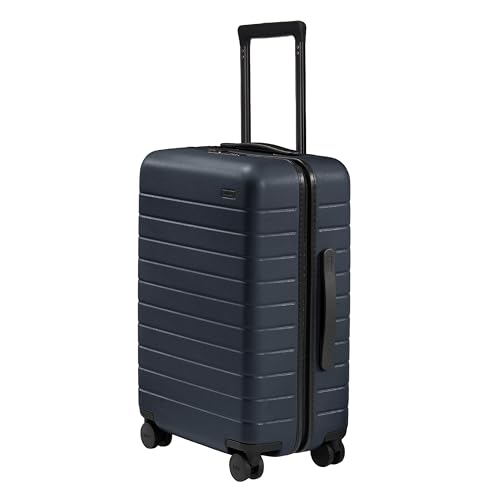
The argument persists because both designs solve different problems well. A hard shell, typically made from polycarbonate, ABS or a blend, holds its shape, shrugs off rain and gives a clean, scratch-resistant surface that is easy to wipe down. A softside bag, usually made from ballistic nylon or polyester, has no fixed shape, so it can bulge a little to fit a tight space and often includes external pockets for quick access.
Shopping for one? See our guide: Luggage Hardside vs Softside: Which Should You Choose? (2026).
Threads often describe the same experience: someone checks a hard-shell suitcase, watches it come off the carousel with a few scuffs and nothing else, then tries a soft bag that comes back with a torn corner or a crushed lid. Others report the opposite, saying a hard case cracked along a seam after a rough baggage handling day. Both stories are real, and they usually depend on the material quality and how the bag was loaded.
The Factors That Actually Decide Which Is Better
Forum advice tends to become more useful once you sort the variables. Four factors matter most.
- Protection for contents. A hard shell gives more crush resistance for electronics, camera gear and souvenirs. Soft bags rely on padding and compression, which works well for clothing but offers less defense against a heavy object landing on the case.
- Weight. Softside cases generally weigh less at a comparable size, which can matter when you are close to an airline weight limit. Lightweight hard shells exist, but many polycarbonate designs sit at a slightly higher weight.
- Flexibility and packing space. Soft bags can bulge or compress. Many have expansion zippers that add roughly an inch or two of depth, which helps when you come back with more than you left with. Hard cases usually expand less and rely on a fixed interior.
- Organization. Softside luggage often includes multiple internal and external pockets, useful for chargers, toiletries and documents. Hard shells typically have one main compartment with a divider or packing cube set.
Manufacturers commonly specify exact external dimensions, so check the stated size against your airline’s limit before buying. Many carriers measure including wheels and handles, and a soft bag that looks like it fits can still fail a sizer when it is fully packed.
How to Decide and What to Do About It
Start with your trip type. Frequent flyers who rely on carry-on only often lean softside because it compresses into tight bin space and keeps weight low. Travelers who check luggage on rough routes or carry fragile gear often prefer hardside. Families and people who pack heavy shoes or books may find a hard shell easier to wipe clean.
Next, look at the material and construction, not just the category. Forum users frequently point out that a well-made softside bag can outlast a poorly built hard case, and vice versa. Check the zippers, wheel mounts and corner reinforcement. For hard cases, the shell material matters, and the guide on Polycarbonate, ABS, Polypropylene or Aluminum: Hard-Shell Luggage Materials explains how each one behaves under stress.
If you are still undecided, consider a spinner versus a two-wheel design, since wheel style affects how a bag handles on uneven floors. The comparison in Spinner vs Two-Wheel Luggage: Which Rolls Better for Your Trips? covers that tradeoff in detail.
Practical Steps Before You Buy
- Measure your airline’s carry-on limit, including wheels and handles, and compare it with the bag’s listed external dimensions.
- Weigh a fully packed bag on a bathroom scale to see how close you are to weight limits.
- Decide whether your priority is protection (favoring hardside) or light weight and flexibility (favoring softside).
- Test the zippers and handle extension before buying, and check for an expansion zipper if you want extra room.
- Pack fragile items in the center of the case, surrounded by soft clothing, regardless of which shell you choose.
Related questions
Is hardside luggage better for checked bags?
Often, yes. A hard shell resists punctures and crushing better than fabric, which matters on checked trips where bags may be stacked or tossed. Soft bags still work well for checked use if they have reinforced bases and strong zippers.
Does softside luggage tear easily?
Quality varies. Ballistic nylon resists abrasion well, while thin polyester can snag or tear at the corners. Look for heavier denier fabric and reinforced stress points. The guide Soft-Side Luggage: Fabrics, Expansion and Pockets breaks down fabric choices in more detail.
Which is lighter, hardside or softside?
Softside cases usually weigh less at the same size, although some newer lightweight hard shells narrow the gap. Check the stated empty weight rather than assuming.
Can hardside luggage fit in the overhead bin?
Yes, if the external dimensions match your airline’s limit. Hard shells do not flex, so they may not squeeze into a tight bin or sizer the way a softside bag can.
Should I buy hardside or softside for my first trip?
For a first trip with mostly clothing and a short itinerary, a softside carry-on is a practical, lightweight choice. If you plan to check a bag or carry fragile items, a hard shell offers more protection.
Related reading
- Hardside vs Soft Sided Luggage (2026): Which Is Better for Frequent Flyers?
- Hardside Luggage vs Soft: Which Should You Choose? (2026)
- 9 Best Carry On Luggage Hardsides Compared for Frequent Flyers (2026)
- Underseater Carry On Luggage: 7 Best Picks Compared (2026)
Ready to choose one?
About Emily Parker
Emily Parker is part of our editorial team and reviews and edits our luggage & travel tech guides, checking product details against manufacturer specifications and owner feedback.