By Emily Parker
Choosing between luggage hardside vs softside comes down to how you travel. Hardside cases, usually built from polycarbonate or ABS shells, resist crushing and shrug off rain, so they suit frequent flyers, checked-bag travelers, and anyone who packs fragile items. Softside cases, made from nylon or polyester with a flexible frame, weigh less, expand more, and tuck pockets around the outside, which makes them a better match for short trips, tight carry-on rules, and people who like to organize by compartment.
Hardside vs Softside at a Glance
| Criterion | Hardside Luggage | Softside Luggage |
|---|---|---|
| Typical shell or fabric | Polycarbonate, ABS, or polypropylene shell | Ballistic nylon, polyester, or similar woven fabric |
| Weight (carry-on size) | Generally heavier | Generally lighter |
| Impact and crush resistance | Strong; shell flexes and returns | Fabric absorbs impact; can dent or tear |
| Water resistance | Excellent; surface wipes clean | Varies; coated fabrics shed light rain |
| Expansion | Limited, often a single zip extension | Usually generous expansion zipper |
| External pockets | Few or none | Many, including front and side pockets |
| Security | Zippers can be hard to pry open; shell resists cutting | Fabric can be slashed; zippers can be locked |
| Packing organization | Usually one main compartment, sometimes a divider panel | Multiple compartments and packing organizers |
| Best for | Protection, checked bags, fragile items | Light weight, flexibility, organization |
Weight: Softside Wins for Most Travelers
Weight is where softside luggage usually pulls ahead. Fabric shells have less mass than thick molded plastic, so a softside carry-on often weighs noticeably less than a hardside carry-on of the same external dimensions. Since many airlines set personal item and carry-on weight limits, and budget carriers can enforce strict checked-bag caps, that difference can matter. Owners often report that a lighter empty case leaves more room in the weight allowance for clothes and shoes.
Hardside shells have improved, though. Some polycarbonate models are light enough to compete, and a few brands publish empty weights that land close to softside options. Always check the manufacturer’s listed empty weight for the exact size you want rather than assuming the material decides it. For more on this trade-off, see Lightweight Luggage: How Light Is Light and What You Give Up.
Winner: Softside, for shoppers who prioritize the lightest empty weight.
Durability and Impact Protection: Hardside Wins
Hardside luggage is the stronger choice when the case takes a beating. A polycarbonate shell flexes under pressure and springs back, so it handles being dropped on a curb, stacked under heavy bags, or tossed onto a baggage belt. Owners often report that hardside cases keep the contents of a suitcase intact in these situations, which is why they are common for checked luggage.
Softside cases are not weak, but they respond differently. Ballistic nylon resists abrasion well, yet a sharp corner or a heavy crush can leave a dent or a torn seam. Many softside owners find that small scuffs are cosmetic, while hardside owners tend to notice scratches on the shell over time. Check the shell material and the frame: a polycarbonate or ABS shell is the hardside benchmark, and the material differences are covered in Polycarbonate, ABS, Polypropylene or Aluminum: Hard-Shell Luggage Materials.
Winner: Hardside, particularly for checked bags and fragile contents.
Expansion and Capacity: Softside Wins
Softside cases typically offer a full-length expansion zipper that adds several inches of depth. That extra room helps on trips where you buy souvenirs or need to bring back extra layers. Hardside cases sometimes expand too, but the mechanism is often a single zipper seam with a limited gain, and some shells cannot expand at all.
Be careful with expansion claims. Measure the stated capacity in liters and check the depth in inches with the zipper closed and open. Airline size limits apply to the expanded dimensions in many cases, so an expanded softside case may exceed a carry-on limit when full. Read How to Choose Carry-On Luggage: Size Limits, Weight and Wheels before relying on expansion.
Winner: Softside, for flexible capacity.
Water and Weather Resistance: Hardside Wins
A hardside shell sheds rain, spilled drinks, and muddy splashes, and it wipes clean with a damp cloth. Softside fabrics vary a lot. Many are coated and handle light rain well, but the seams and zipper tracks can let moisture through in a heavy downpour. If you regularly arrive in wet climates, or you worry about a bag sitting on a wet tarmac, hardside is the safer pick.
Winner: Hardside, for wet-weather reliability.
Organization and Pockets: Softside Wins
Softside luggage is built for organization. External front pockets, side pockets, and interior mesh panels let you separate chargers, toiletries, and documents without digging. Hardside cases usually offer one main compartment, often with a divider panel and sometimes a small interior pocket. Packing cubes work in either case, but softside cases give you more built-in storage to pair with them.
Keep in mind that external pockets can be a security consideration. Keep valuables in an interior pocket or your personal item, and do not rely on a zipper alone to protect what you carry.
Winner: Softside, for organization.
Security: A Split Decision
Each type offers a different kind of security. A hardside shell is hard to slash or pry, and many models use a combination lock or a built-in TSA-recognized latch. Softside fabric can be cut, so bag owners sometimes add a cable lock or a security wrap to the zipper pulls. For locks, TSA Luggage Locks Explained: What They Do and Do Not Do covers what the approved locks actually do and what they do not do.
Winner: Hardside for resistance to tampering and cutting. Softside is adequate with added locks.
Which Should You Choose?
- Choose hardside if you check bags often, travel with fragile items, or visit wet climates.
- Choose hardside if you want a case that resists crushing and cleans easily.
- Choose softside if you need the lightest possible carry-on to stay under weight limits.
- Choose softside if you want expansion and many external pockets for organization.
- Choose softside if you take short trips with a single carry-on and value flexibility.
- Consider both if you travel for business and for leisure. A hardside carry-on for protection and a softside case for weekends can cover both needs.
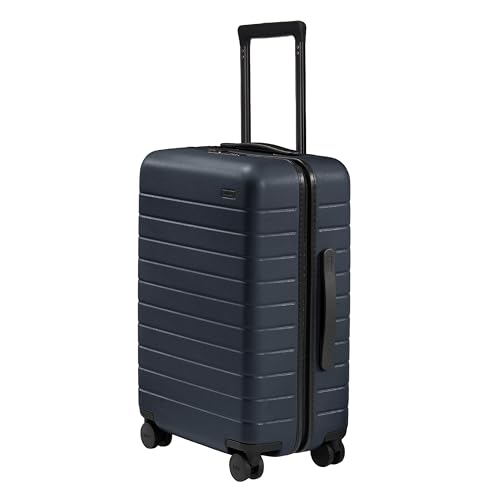
If you are shopping for a hardside carry-on, these are worth comparing:
View on AmazonIf you prefer a softside carry-on, look at this option:
View on AmazonFor a broader look at styles, see Travel Backpack vs Suitcase: Which Fits Your Trip? and Soft-Side Luggage: Fabrics, Expansion and Pockets.
FAQ
Is hardside luggage better for checked bags?
In most cases, yes. A hardside shell resists crushing and impacts that baggage handling can deliver, which helps protect what you pack. Softside checked bags can still work well if they have reinforced bases and good frames, but hardside is the more common choice for checked travel.
Does softside luggage hold up over time?
Softside luggage holds up well with normal use, though owners often report wear on corners, zipper teeth, and the bottom panel after years of travel. Choosing a reinforced frame and checking the zipper quality both help extend the life of the case.
Which type is better for a carry-on?
Softside is usually the better carry-on choice for weight and flexibility, since it is lighter and can compress slightly when the overhead bin is tight. Hardside carry-ons are strong and protective, but they add weight. Always check your airline’s exact size and weight limits before buying.
Can hardside luggage expand?
Some hardside cases expand with a zipper seam, but the gain is usually smaller than a softside expansion. Check the listed capacity and the expanded measurements, because an expanded case may exceed carry-on limits.
Are hardside cases safer against theft?
A hardside shell is harder to cut or pry open than fabric, which gives it an advantage. However, no suitcase is theft-proof. Keep valuables in your personal item and use locks as an added deterrent.
Conclusion
For most travelers who want a light, flexible, organized bag, softside luggage is the better default. For anyone who checks bags, carries fragile gear, or travels in rain, hardside luggage offers stronger protection and easier cleaning. Weigh the trade-offs against your airline’s limits and your usual trip type, and you will find the right fit in the luggage hardside vs softside decision.
About Emily Parker
Emily Parker is part of our editorial team and reviews and edits our luggage & travel tech guides, checking product details against manufacturer specifications and owner feedback.