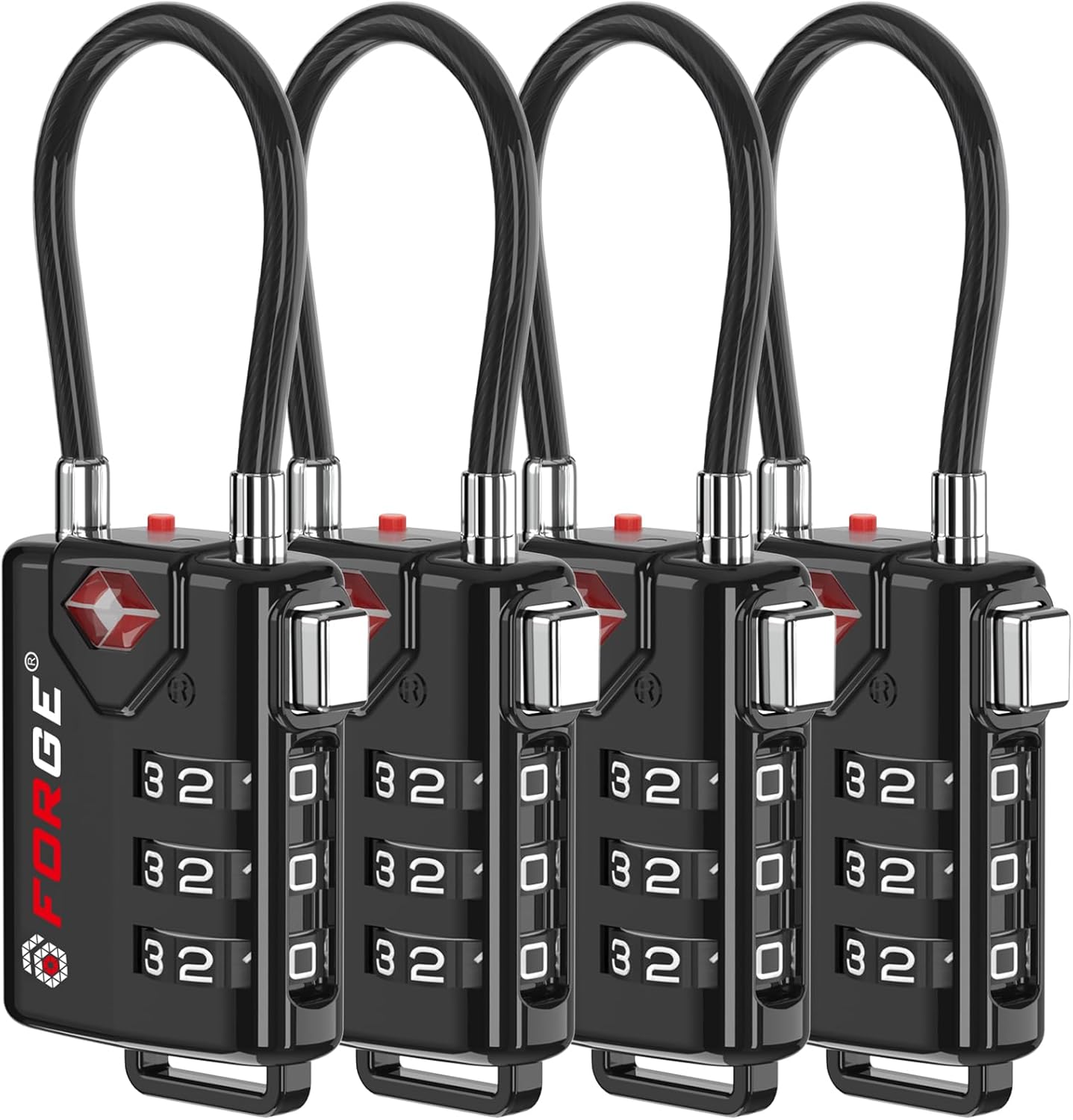
TSA-recognized locks are designed to let airport security screeners open your checked luggage without cutting the lock off. They do not make your bag truly secure, and they have specific limitations you should understand before you travel. This article explains how these locks work, the different types available, the real-world security they offer, and why your most valuable items should never go in a checked bag.
What makes a lock TSA-recognized
A TSA-recognized lock is a lock that can be opened by Transportation Security Administration screeners using a set of master keys. The lock’s internal mechanism has a special bypass that accepts those keys, so screeners can open the bag for inspection without cutting the lock. The lock still works as a normal combination or key lock for you. The master keys are held only by TSA and a few other authorized agencies. A red diamond (Travel Sentry) or red torch (Safe Skies) logo on the lock shows that it is TSA-recognized. This system was created so that screeners can inspect checked bags when needed without destroying the lock or the zipper pull.
It is important to know that TSA-recognized locks are voluntary. You can use any lock you like on your checked luggage, but if a screener needs to inspect the bag and cannot open the lock, they will cut it off. The TSA does not require you to use a TSA-recognized lock. Many travelers choose them for convenience, but they are not a security requirement.
Combination, key or cable
TSA-recognized locks come in three main styles: combination locks, key locks, and cable locks. Each has pros and cons for travel.
Combination locks
Combination locks use a dial or numbered wheels to set a code you choose. You do not need to carry a separate key, which is convenient. The downside is that you must remember the combination. If you forget it, you will have to cut the lock yourself or have a locksmith open it. Some combination locks have a reset button that can be accidentally pressed during travel, changing the code. Choose a lock with a sturdy reset mechanism that requires a tool or a deliberate action to change the code.
Key locks
Key locks use a small key to lock and unlock. They are simple and reliable, but you must keep track of the key. Losing the key means you cannot open the lock. Some travelers tape a spare key to the inside of the bag or keep one in their carry-on. Key locks are generally less expensive than combination locks, but the key can be a small item to misplace.
Cable locks
Cable locks have a flexible steel cable instead of a rigid shackle. They are often used to secure a backpack zipper or to lock a bag to a fixed object in a hotel room. Cable locks are more versatile because you can loop the cable through multiple zipper pulls or around a chair leg. However, the cable can be cut with bolt cutters more easily than a hardened steel shackle. For checked luggage, a cable lock is acceptable, but it offers less physical resistance than a solid lock.
All three types are available as TSA luggage locks. When choosing, consider whether you prefer to remember a code or carry a key, and how much physical strength you need from the lock body.
Built-in suitcase locks
Many hard-sided suitcases now come with a built-in TSA-recognized combination lock. The lock is integrated into the frame of the suitcase, usually near the top or side. This is convenient because you do not need to buy a separate lock, and the lock is always with the bag. The mechanism is often recessed, making it harder to pry open. Some built-in locks have a three-digit combination that you set yourself, while others have a fixed code from the factory that you can later change.
The main drawback of built-in locks is that if the lock mechanism fails, you cannot simply replace it with another lock. You would need to have the suitcase repaired or use a separate external lock over the zipper pulls. Also, some built-in locks are made of plastic, which can break if the bag is roughly handled. Check the manufacturer’s instructions for setting and resetting the combination before your first trip. If you buy a used suitcase, make sure you know how to reset the code so you are not locked out.
Built-in locks are convenient, but they are only as strong as the zipper they secure. A built-in lock does not protect against someone opening the zipper with a pen, which is the most common way thieves access checked bags.
Zippers: the weak point
The zipper is the most vulnerable part of any soft-sided or many hard-sided suitcases. A TSA-recognized lock only secures the zipper pull tabs together. It does not lock the zipper teeth themselves. A thief can take a ballpoint pen or a similar pointed object, push it through the zipper teeth behind the locked pull, and slide the zipper open. This technique works on most standard zippers and takes only seconds. The zipper can then be closed again, leaving the lock in place and no visible sign of tampering.
Some luggage brands offer “lockable zippers” or “anti-theft zippers” that have a small hole in the zipper pull that accepts a lock, or that use a special track that resists pen insertion. These are more secure, but they are not foolproof. If you are concerned about zipper vulnerability, look for luggage with a zipper that has a protective flap or a recessed track. Even then, a determined thief with a sharp tool can cut through the fabric or the zipper tape itself.
For checked luggage, the lock is mainly a deterrent against casual theft and a way to keep the bag closed during handling. It will not stop a determined thief who knows the pen trick. If you are carrying truly valuable items, they should not be in a checked bag at all.
What locks actually deter
A TSA-recognized lock serves several real purposes, but none of them are about absolute security. Here is what a lock realistically does:
- Keeps the bag closed during transit. Bags are tossed, stacked, and jostled. A lock keeps the zipper pulls together so the bag does not pop open accidentally.
- Deters casual theft. A locked bag is slightly less tempting than an unlocked one. A thief who sees a lock may move on to an easier target, especially if they are looking for a quick grab.
- Signals that the bag has been inspected. When TSA physically inspects a checked bag, it places a notice of inspection inside, with or without a lock. A TSA-recognized lock simply lets screeners do that and relock the bag without cutting anything.
- Provides a small layer of difficulty. Opening a locked zipper with a pen is still a crime, and a lock adds a few extra seconds. For most travelers, that is enough to prevent opportunistic theft.
What a lock does not do: It does not prevent a thief from cutting the fabric of the bag. It does not stop someone from opening the zipper with a pen. It does not protect against luggage being stolen outright. It does not guarantee that your items will not be taken during a TSA inspection (though TSA screeners are trained and monitored). The lock is a tool for convenience and minor deterrence, not a security device.
Valuables belong in your carry-on
The single most important rule for protecting your valuables when flying is to keep them in your carry-on bag, not in checked luggage. No lock, TSA-recognized or otherwise, can protect items that are out of your sight and control. Checked bags are handled by multiple people and pass through areas you cannot see. Even a high-quality lock will not stop a determined thief with a knife or a bolt cutter.
Items that should always go in your carry-on include:
- Passports, IDs, and travel documents
- Cash, credit cards, and wallets
- Electronics such as laptops, tablets, phones, and cameras
- Jewelry and other small valuables
- Medications and medical devices
- Lithium batteries and power banks (per FAA PackSafe guidelines, spare lithium batteries must be in carry-on baggage)
If you must check a bag, use a TSA-recognized lock to keep the zippers together and to let screeners relock it after an inspection. But assume that anything in checked luggage could be lost or stolen. For added peace of mind, consider using an anti-theft backpack for your carry-on, which often includes lockable zippers and cut-resistant materials. When choosing a carry-on bag, refer to how to choose carry-on luggage for size and feature guidance.
Also check the TSA What Can I Bring page before you pack to confirm which items are allowed in carry-on versus checked bags. This will save you time at security and help you avoid having items taken away at the checkpoint.
FAQ
Do I have to use a TSA-recognized lock?
No. TSA-recognized locks are voluntary. You can use any lock on your checked luggage, but if TSA needs to inspect the bag, they will cut off a non-recognized lock. Many travelers prefer TSA-recognized locks to avoid having their lock destroyed.
Can TSA open any TSA-recognized lock?
Yes, TSA screeners have master keys that can open all TSA-recognized locks. The lock’s internal mechanism includes a bypass that accepts these keys. The master keys are not available to the public.
Are TSA locks secure against theft?
TSA locks provide basic deterrence but are not high-security. The zipper is the weak point, and a thief can open it with a pen without touching the lock. For real security, keep valuables in your carry-on.
What if I lose the key or forget the combination?
If you lose the key, you will need to cut the lock off with bolt cutters or a small hacksaw. If you forget the combination, check whether you ever changed it from the factory setting in the instructions, or contact the manufacturer. Some combination locks have a reset function that allows you to set a new code if you know the current one.
A TSA-recognized lock is a useful travel accessory for keeping your checked bag closed and signaling if it has been inspected. It is not a security device for valuables. Choose a lock that fits your preference for keys or combinations, understand that the zipper is the real weak point, and always keep your most important items in your carry-on. With realistic expectations, a TSA lock is a simple and helpful part of your travel gear.