By Emily Parker
Updated November 2026
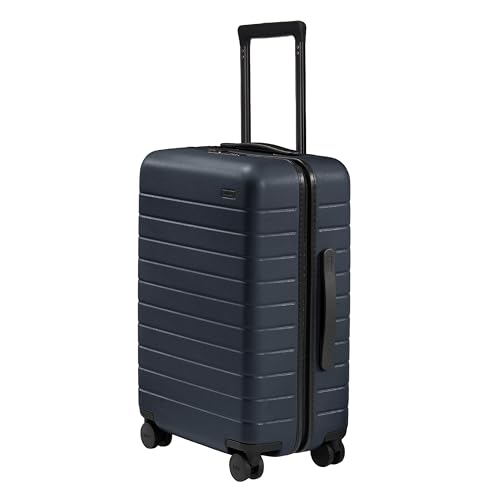
Hardside luggage without zippers uses a rigid shell that opens with latches, hinges, or a lift-up lid instead of a zipper track. In this guide you will learn which opening styles count as zipper-free, how the main designs compare on access and durability, and what to check before you buy. You will also get a short checklist for inspecting a shell in a store or when reading manufacturer specifications.
What Counts as Zipper-Free Hardside Luggage
Most hardside cases are still built with a zipper somewhere, usually in the expansion seam or the lower gusset. A truly zipper-free hardside bag avoids zippers for the main compartment, so the shell is opened by clamshell halves, a top lid, or a front-loading door. Some brands market “zipperless” designs, while others use a zipper only for a small exterior pocket. Read the product specifications carefully, since a bag can be described as hardside and still rely on a zipper for expansion.
Shopping for one? See our guide: 9 Best Carry On Luggage Hardsides Compared for Frequent Flyers (2026).
Main Opening Styles Compared
Zipper-free hardside luggage generally falls into three opening styles. Each handles packing and security differently.
Clamshell (Two-Half) Designs
A clamshell case splits into two shell halves joined by a central hinge, with the contents held in place by an interior divider or strap system. You open both halves at once to get full access. Owners often report this makes it easy to see everything at a glance, but the bag needs more floor or table space to open fully.
Top-Open Designs
Top-open cases have a lid that lifts on a hinge, usually with a single latch or a pair of latches along the front. Many include a front or top compartment for quick-access items. These are common in budget and mid-range hardside luggage and are generally simpler to use in a tight space.
Front-Loading Designs
Front-loading shells open like a small cabinet door, giving access to a stacked interior with dividers. They can be practical for keeping clothes organized, though the door hinges and latches should be checked closely because they carry the most stress.
Step-by-Step: Evaluating a Zipper-Free Hardside Bag
Use the following process to compare options, whether you are in a store or reading product listings.
- Confirm the opening style. Check whether the case is clamshell, top-open, or front-loading, and whether any zipper appears in the main compartment or the expansion seam.
- Measure the external dimensions. Compare the listed height, width, and depth against the airline’s carry-on limits. Many U.S. carriers use a combined limit around 22 inches by 14 inches by 9 inches, but this varies, so check your airline’s current policy.
- Check the latch count and placement. Two or more latches spread along the seam generally distribute pressure better than a single latch in the center.
- Inspect the hinges. Look for metal or reinforced polymer hinges rather than thin plastic tabs that can flex or crack.
- Test the interior access. Open the case fully and check whether the divider system lets you reach items without emptying the whole bag.
- Review the warranty terms. Manufacturers typically specify coverage for shell cracks, hinge failures, and wheel or handle defects, so read what is covered and for how long.
Tools and Supplies That Help
- A tape measure or ruler for checking external dimensions and internal depth
- A compression strap or packing cube set to keep contents from shifting inside a shell
- A luggage scale to confirm weight limits before you leave home
- A small bag of silica gel packets to limit moisture build-up in a closed hardshell
Packing Tips for a Zipper-Free Shell
Because a hardside case has no expansion zipper in many designs, the internal space is fixed. Pack soft, bulky items like sweaters and pajamas against the outer walls, then fill gaps with smaller items. Use the interior straps to prevent contents from pressing against the latches or hinges. Packing heavy items low and centered helps keep the shell balanced when you roll it through a terminal.
Common Mistakes to Avoid
- Overpacking the shell. Forcing the lid closed can strain hinges and latches, and it may cause the seam to split over time.
- Assuming “hardside” means no zipper. Many hardside cases still use a zipper for expansion or exterior pockets, so check the listing.
- Ignoring the opening footprint. A clamshell that needs a full table can be awkward in a small hotel room.
- Leaving sharp items loose. Items like metal tools can scratch the interior lining or create pressure points on the shell.
- Skipping the warranty fine print. Coverage for hinges and wheels often differs from coverage for the shell itself.
Tips for Choosing and Maintaining Your Case
Wipe the shell with a damp cloth and mild soap after trips, and check the latches for grit that could interfere with closing. Store the bag with the lid slightly open or the latches unlatched during long periods of non-use, so the hinges and seals are not under constant tension. If you travel often, rotate between two cases so one can rest between trips.
If you are comparing specific models, you may find these related reviews useful: Soft Side Luggage vs Hardside: Which Should You Choose?, Top Open Hardside Luggage: 4 Best Picks for Easy Packing in 2026, Top Loading Hardside Luggage: 5 Best Picks Compared (2026), and Samsonite Hardside Luggage Set: How to Choose the Right One (2026). For carry-on sizing, see Rolling Hardside Carry-on Luggage 18in: A Practical Guide (2026).
Recommended gear
- Packing cubes keep folded clothes organized inside a shell with no side access, so contents stay put when the lid opens. View on Amazon
- Digital luggage scale helps you confirm weight limits before check-in, which matters when a hardside case is already heavy empty. View on Amazon
- Compression straps hold clothing in place so the lid closes without forcing. View on Amazon
FAQ
Is hardside luggage without a zipper more durable?
Not necessarily. A zipper-free shell can reduce failure points at the seams, but durability depends on the shell material, hinge quality, and latch strength. Check manufacturer specifications for each.
Are zipperless hardside bags allowed on airplanes?
Yes, as long as they meet the airline’s size and weight limits. Always confirm current rules with your carrier before traveling.
Can I expand a hardside case without a zipper?
Some hardside cases expand through a zipper in the shell seam, so a truly zipperless design usually does not expand. Check the product description for expansion features.
Which opening style is easiest to pack?
Top-open cases are often the simplest to load in a small space, while clamshells give the most complete view of the contents.
How do I stop a hardshell from getting scratched?
Store it in a protective cover during transit, avoid stacking heavy items on the shell, and wipe away grit regularly.
Do hinges and latches wear out?
Yes, with repeated use. Inspect them periodically, and contact the manufacturer if a hinge becomes loose or a latch stops closing securely.
Is a zipperless hardside case good for fragile items?
It can be, since the rigid shell protects contents, but fragile items should still be wrapped and placed away from the latches.
Conclusion
Hardside luggage without zippers comes in clamshell, top-open, and front-loading styles, each with different access and footprint trade-offs. Check the opening design, latch and hinge quality, and external dimensions before you buy. A careful inspection and smart packing will help the shell last through many trips.
Ready to choose one?
About Emily Parker
Emily Parker is part of our editorial team and reviews and edits our luggage & travel tech guides, checking product details against manufacturer specifications and owner feedback.