By Emily Parker
Is hardside or softside luggage better? For most travelers, the answer depends on how they pack and travel. Hardside luggage usually wins for protecting fragile items, resisting moisture and keeping its shape under pressure. Softside luggage tends to win for flexibility, expansion room and squeezing into tight overhead bins or a last-minute bag. Read on to see which criteria matter most for your trips.
| Criterion | Hardside luggage | Softside luggage |
|---|---|---|
| Impact protection | Shell absorbs and spreads force | Fabric and padding absorb less |
| Weather and moisture resistance | Generally strong | Varies by fabric and coating |
| Weight | Often heavier at the same size | Often lighter at the same size |
| Expansion | Limited, usually a zipper extension | Common and often generous |
| External pockets | Few or none | Many |
| Packing shape | Rigid, holds its form | Flexible, fits tight spaces |
| Security | Harder to slash or pry open | Fabric can be cut, zippers need locks |
| Repairability | Shell cracks can be difficult to fix | Fabric tears can often be patched |
Impact Protection: Hardside Wins
When a bag is dropped, tossed onto a baggage cart or squeezed under a bus, the shell does most of the work. A hardside case spreads impact across its surface, which helps protect the contents inside. Manufacturers of hardside cases typically use polycarbonate, ABS or polypropylene, and each material handles flex and cracking a little differently. You can read more about those differences in Polycarbonate, ABS, Polypropylene or Aluminum: Hard-Shell Luggage Materials.
Softside luggage relies on a nylon or polyester shell over a frame and padding. It absorbs some shock, but a sharp corner or a heavy object landing on it can press through to what’s inside. If you regularly pack cameras, laptops, glassware or gifts you don’t want bruised, hardside is the safer bet.
Winner: Hardside.
Weather and Moisture Resistance: Hardside Usually Wins
Rain, snow and spilled drinks are easier to handle with a hard shell. Most hardside cases are sealed and water-resistant by design, and a quick wipe-down removes most grime. Softside bags vary widely. Some use coated or treated fabrics that shed light rain well, while others soak through in a downpour and take longer to dry. Check the fabric description and whether the manufacturer lists a water-resistance rating before you assume protection.
Winner: Hardside, with the caveat that good coated softside fabric performs reasonably well.
Weight: Softside Usually Wins
Weight matters most when you’re close to an airline limit. Softside cases generally use lighter materials and fewer structural parts, so a softside bag of the same nominal size often weighs less than its hardside equivalent. Hardside shells, especially polycarbonate ones with reinforced corners, add mass. If you’re trying to stay under a carrier’s weight allowance on a checked bag, or you simply don’t want to lift a heavy case onto an overhead rack, softside has the edge. For more on this, see Lightweight Luggage: How Light Is Light and What You Give Up.
Winner: Softside.
Expansion and Packing Flexibility: Softside Wins
Many softside cases include a zippered expansion panel that adds roughly an inch or two of depth, which can be enough to fit a jacket or an extra pair of shoes. Some softside designs also compress well when half-empty, so you can carry a bag that’s easy to stow in a closet at home.
Hardside cases are rigid and often offer a smaller expansion zipper, if any at all. What they lose in flexibility they gain in a consistent outer shape. If you want a bag that stacks neatly and doesn’t bulge, that rigidity helps.
Airline sizing is worth checking before you rely on expansion. Many carriers measure bags in their expanded state, so a bag that is legal empty may be over the limit when full. The guide How to Choose Carry-On Luggage: Size Limits, Weight and Wheels explains how to measure correctly.
Winner: Softside.
Pockets and Organization: Softside Wins
Softside luggage typically includes exterior pockets, compression straps, and interior dividers. These make it easier to separate chargers, toiletries and documents without digging. Hardside cases usually have one main compartment with a divider or two, and many have no external pockets at all. If you like to keep essentials within reach while moving through an airport, softside is more convenient. The article Soft-Side Luggage: Fabrics, Expansion and Pockets covers how these features differ across brands.
Winner: Softside.
Security: Hardside Has the Edge
Hardside shells are difficult to cut or pry open, which makes them a better choice if you’re worried about theft from checked bags. Most hardside cases use a combination zipper or a latch with a lock point. Softside bags can be slashed, and their zippers can be opened if not secured. Either type can be locked with a TSA-accepted lock, but those locks only deter casual access; they do not prevent cutting. For a clear explanation of what these locks do and don’t do, read TSA Luggage Locks Explained: What They Do and Do Not Do.
Winner: Hardside.
Repairability and Longevity: Depends on Damage
Softside fabric tears can often be patched or stitched, and replacement zippers and wheels are commonly sold for many models. A cracked hardside shell is usually harder to repair cleanly, although some brands sell replacement panels. Owners often report that hardside cases last longer under heavy use, but a scraped or dented shell still shows wear. Think about what kind of damage you expect. Frequent rough handling favors hardside; occasional puncture or zipper trouble is easier to fix on softside. For a broader discussion, see Choosing Luggage for Long Trips: Durability and Repairability.
Winner: Split. Softside is easier to patch, hardside is usually stronger against impact.
Which Should You Choose?
Use these guidelines to match a suitcase type to your travel habits:
- Choose hardside if you: carry fragile items, travel to rainy or snowy places, check bags often, or want a bag that holds a consistent shape.
- Choose softside if you: need the lightest possible bag, want expansion room, like external pockets, or regularly squeeze into tight overhead spaces.
- Choose hardside for international trips where baggage handling is rougher and your contents are valuable.
- Choose softside for weekend or short trips where weight and organization matter more than impact protection.
- Consider a hybrid design if you want some structure with a flexible front panel, a common compromise in newer models.
If you’re shopping for a carry-on specifically, the list 9 Best Carry On Luggage Hardsides Compared for Frequent Flyers (2026) shows a range of hard-shell options, while Protege Carry On Luggage: 7 Best Picks for Airline Size Limits (2026) covers several softside-leaning designs.
Here are representative examples of each type to look at:
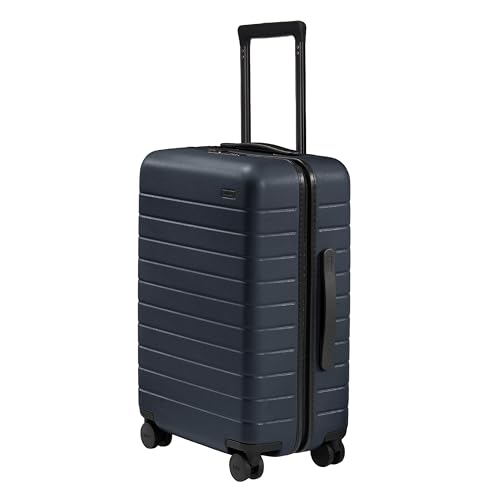
Hardside option: View on Amazon
Softside option: View on Amazon
FAQ
Is hardside or softside luggage better for protecting fragile items?
Hardside luggage generally offers better impact protection because the shell spreads force across its surface. Softside bags can work for fragile items if you wrap them well and use interior padding, but a hard shell gives more reliable protection during rough handling.
Is softside luggage lighter than hardside?
Often, yes. Softside cases usually use lighter materials and fewer rigid parts, so the same nominal size tends to weigh less. Always check the manufacturer’s listed weight, since some hardside models are light too.
Does hardside luggage last longer than softside?
It depends on how you travel. Hardside shells resist impact well but can crack and are harder to repair. Softside fabric can tear but is often easier to patch. Owners often report that heavy-duty use favors hardside, while occasional travel suits either type.
Can you expand hardside luggage?
Some hardside cases include a zippered expansion, but it is usually smaller than what softside offers. Check the airline’s measurement rules, because many carriers measure bags in their expanded state.
Which type is better for airline carry-on limits?
Softside is often easier to fit into tight overhead bins because it flexes, and it is usually lighter. Hardside holds its shape, which can help with consistent stowing. Measure your bag fully packed and check the specific airline’s dimensions before you fly.
Conclusion
So, is hardside or softside luggage better? Hardside is better for protection, security and weather resistance. Softside is better for weight, expansion and pocket organization. Frequent travelers who handle valuable or fragile items usually benefit most from a hard shell, while those who prioritize light weight and flexible packing will likely prefer softside. Match the bag to your most common trip, measure it against the airline’s limits, and you’ll avoid most regrets.
About Emily Parker
Emily Parker is part of our editorial team and reviews and edits our luggage & travel tech guides, checking product details against manufacturer specifications and owner feedback.