By Emily Parker
Updated November 2026
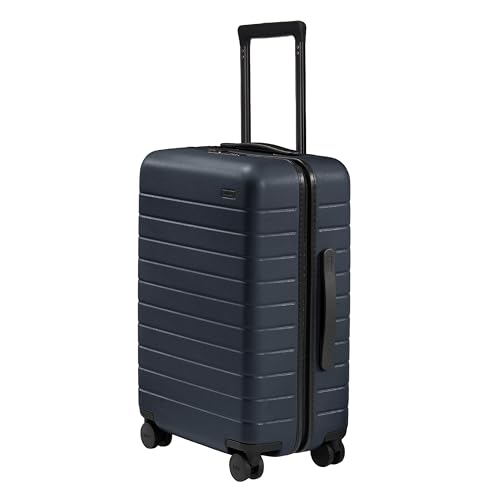
Carry on luggage dimensions United sets for its main cabin passengers come down to one number that matters most: a maximum of 22 x 14 x 9 inches (56 x 35 x 23 cm) including wheels and handles. This guide walks you through how to measure your bag correctly, what counts toward the total, how weight and personal item rules interact with the carry-on limit, and how to avoid having your bag gate-checked at the jet bridge.
United’s Carry-On Size Limit at a Glance
United publishes a single maximum size for carry-on bags that applies to most domestic and international flights. Manufacturers and airline policy pages specify the same outer dimensions, so the limit is consistent across the fleet even though individual gate agents may vary in how strictly they enforce it.
Shopping for one? See our guide: 5 Best Carry On International Luggage for Long-Haul Trips (2026).
| Item | Maximum Size | Notes |
|---|---|---|
| Carry-on bag (overhead bin) | 22 x 14 x 9 in (56 x 35 x 23 cm) | Includes wheels, handles and any exterior pockets |
| Personal item (under seat) | Roughly 18 x 14 x 8 in (46 x 35 x 20 cm) | Must fit under the seat in front of you |
| Checked bag (for reference) | 62 in total linear (L + W + H) | Separate from carry-on rules |
Always confirm current figures on United’s official baggage page before you travel, because fare class, aircraft type and partner airlines can change what is allowed on a given flight.
How to Measure Your Bag Correctly
Most bags that fail at the airport are not oversized by a lot. They are a couple of inches over once you include the wheels, the top handle and a bulging side pocket. Measuring the bag the way an agent will is the single most useful step you can take.
Step 1: Empty the bag and extend nothing
Remove any items that compress or bulge. Zip all pockets closed and retract any telescoping handle. Expandable bags should be measured in their smallest, unexpanded state unless the airline specifies otherwise.
Step 2: Measure height from the bottom of the wheels to the top of the handle
Stand the bag upright on its wheels. Measure from the floor to the highest point, which is usually the top of the carry handle. Many spinner bags land at 21 to 22 inches here, which leaves little room for error.
Step 3: Measure width across the widest point
Include side handles, zipper pulls and any bulge from a side pocket. Lay the bag flat if needed and measure the full span edge to edge.
Step 4: Measure depth from front to back
Measure the thickness when the bag is standing up, including any front pocket or hard-shell bulge. Hardside bags that appear to be 9 inches can reach 9.5 or more once the shell flexes outward.
Step 5: Check the total against the limit
Your results should not exceed 22 x 14 x 9 inches. If any single dimension is over, the bag can still be flagged even if the others are under.
What Counts Toward the Carry-On Size
Airlines measure the bag in its real-world configuration, not the number printed on the product listing. These features are commonly counted:
- Spinner or four-wheel casters, including their housing
- Top and side carry handles in the extended position
- Exterior pockets, even when empty
- Protruding zipper pulls, luggage tags and attached accessories
- Expansion zippers that have been opened
Weight, Personal Items and Other Rules
Dimensions are only part of the picture. United does not impose a standard weight limit on carry-on bags for most passengers, but very heavy bags can be difficult to lift into overhead bins and may be questioned by agents. Plan for a carry-on that you can lift comfortably overhead without help.
Your personal item must still fit under the seat. A backpack or small tote used alongside a full-size carry-on is common, but a second wheeled bag will almost always be treated as a carry-on and may be gate-checked if bins are full.
Choosing a Bag That Fits United’s Limit
When you shop, look for a bag that is designed to sit at or just under the maximum, with a small margin for wheel and handle variation. Bags marketed as “22-inch” are not all identical. Some are measured body only, which means the wheels and handle push them past the limit.
Hardside and softside bags behave differently. Softside bags can compress slightly when pressed into a bin, while hardside shells keep their shape. Both are acceptable, but hardside bags leave less room for error if you have overstuffed them.
Guides to specific models can help you compare real dimensions. See Carry on Luggage Size for Delta: Dimensions, Weight and Fit Tips for a comparison of how major carriers handle size, and Aa Carry on Luggage Size: Dimensions, Weight and How to Check Before You Fly for a similar breakdown of another airline’s rules. If you travel with a hardside option, Travelpro Platinum Elite Hardside Expandable Carry on Luggage: A Practical Guide (2026) shows how expandable designs are measured. For ultra-compact options, Smallest Carry On Luggage: 5 Best Compact Picks of 2026 lists bags that leave extra margin.
Recommended gear
A flexible measuring tape is the most useful tool for checking your bag before you fly. Choose one that can be pulled around corners and read accurately in inches.
- Flexible sewing or fabric measuring tape lets you measure curved shells and pockets exactly as the agent would. View on Amazon
- Luggage scale helps you stay within any weight limit your fare or partner airline may apply. View on Amazon
- Soft packing cubes let you compress clothing so the bag closes without bulging the zippers. View on Amazon
Common Mistakes
- Measuring only the body and forgetting the wheels and top handle
- Assuming a bag listed as “22 inches” is always under the limit
- Leaving an expansion zipper open during the airport check
- Overpacking a hardside bag so the shell bows outward
- Assuming a second wheeled bag will be allowed as a personal item
Tips for Avoiding Gate Checks
- Measure the bag with wheels and handles in place, then subtract a half-inch of margin.
- Board early in your group if you have a carry-on, so bins are still open.
- Keep valuables, medications and electronics in your personal item.
- Check the aircraft type on your booking, since bin sizes vary between models.
- Ask the gate agent before boarding if you are unsure whether your bag will fit.
FAQ
What are United’s carry-on size limits?
United’s standard carry-on maximum is 22 x 14 x 9 inches (56 x 35 x 23 cm), measured including wheels and handles.
Does the carry-on measurement include wheels?
Yes. Wheels, handles and exterior pockets are included in the total dimensions.
Is there a weight limit for carry-on bags on United?
United does not set a standard weight limit for most carry-on bags, but very heavy bags can be difficult to lift and may draw questions from staff.
What size personal item is allowed on United?
A personal item must fit under the seat in front of you. A common reference size is about 18 x 14 x 8 inches.
Can I use an expandable bag as a carry-on?
Yes, but measure it in its unexpanded state, and close the expansion zipper before you reach the airport.
Will my bag be checked at the gate?
It can be if overhead bins are full or if the bag does not fit the sizer. Boarding early improves your chances of keeping it with you.
Do airline size limits differ between flights?
The core limit is consistent, but bin sizes differ by aircraft, so a bag that fits on one plane may be tight on another.
Should I confirm the rules before traveling?
Yes. Airline policies change, so check United’s official baggage page close to your departure date.
Conclusion
United’s carry-on limit of 22 x 14 x 9 inches is simple on paper but easy to exceed once wheels, handles and pockets are counted. Measure your bag in its real configuration, leave a small margin, and keep your personal item within the under-seat size. A few minutes of preparation at home can prevent a gate-check and the delay that comes with it.
Related reading
- Wenger Hardside Carry-On Luggage: 6 Best Picks Compared (2026)
- Verdi 21 Hardside Spinner Carry On Luggage: 7 Best Picks Compared (2026)
Ready to choose one?
About Emily Parker
Emily Parker is part of our editorial team and reviews and edits our luggage & travel tech guides, checking product details against manufacturer specifications and owner feedback.