By Emily Parker
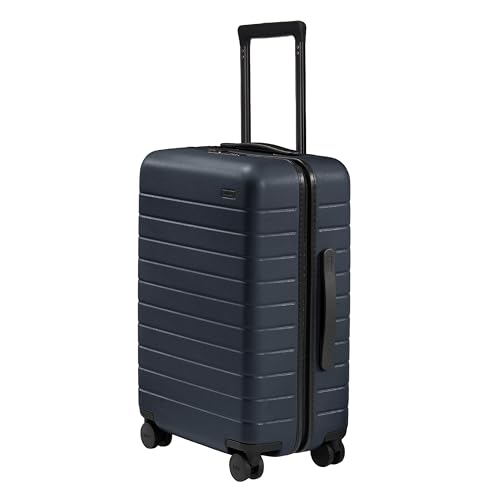
A carry on luggage 22 x 14 x 9 bag is one of the most common carry-on sizes you will see in airline policies and luggage listings. In this guide you will learn what those three numbers mean, how airlines actually measure carry-on bags, how to check whether a bag will fit the overhead bin on your flight, and what to look for when you shop. By the end, you should be able to confirm fit before you buy and avoid the gate-check surprise that catches many travelers.
What 22 x 14 x 9 Actually Means
The dimensions 22 x 14 x 9 are listed in inches and represent height, width and depth, in that order. Some sellers write the same measurement as 9 x 14 x 22 or 22 x-14 x-9 carry-on luggage, but the reading is the same: the tallest side is 22 inches, the middle side is 14 inches and the shallowest side is 9 inches. Those numbers add up to 45 linear inches, which is the sum most airlines use when they describe a carry-on allowance.
The dimensions are a rough guide, not a guarantee. Manufacturers measure the bag at its largest point, usually including wheels, handles and any exterior pockets. Airlines measure the bag as it is presented at check-in, which can mean a bag that looks like it fits on paper still fails a sizer if it is overstuffed or has bulging sides.
How Airlines Measure Carry-On Bags
Most US carriers publish a maximum carry-on size, and the common figures sit close to 22 x 14 x 9 inches. Some budget carriers are stricter, and a few allow slightly larger personal items. The exact limits change, so check your airline’s current baggage page before you travel. Do not rely on a general rule alone. For a deeper look, Packing Cubes for Carry-On Luggage: Choosing a Set That Fits covers this in detail.
Measure in the Right State
- Empty the bag and extend the handle fully only if the airline requires it. Many sizers ask for the handle to be retracted.
- Measure height from the bottom of the wheels to the top of the handle or the highest point of the shell.
- Measure width across the widest part of the bag, usually the side with the wheels attached.
- Measure depth from the front face to the back, including any bulge from a zipper pocket.
- Repeat with the bag packed to a typical load. Soft-side bags can grow by an inch or more once full.
Check Soft-Side and Hard-Side Differences
Hard-shell bags usually hold their stated dimensions. Soft-side bags can compress or expand depending on how full they are. A soft bag rated at 22 x 14 x 9 may measure within limits when half full and exceed them when packed tightly. Check whether the bag has expansion zippers and whether you plan to use them, because an expanded bag may not qualify as a carry-on at all.
Checking Fit Against Overhead Bins
Official size limits are only part of the story. Overhead bins differ by aircraft type. A bag that passes a gate sizer can still be difficult to slide into a shallow bin on a regional jet. Narrow-body aircraft often have bins that accept bags with less height, while wide-body planes can take larger items.
A practical approach is to compare your bag to the sizer at your departure airport and to think about the plane you are flying. If you have a seat assignment near the front, you will usually have an easier time finding bin space.
| Bag Feature | Effect on Fit | What to Do |
|---|---|---|
| Four spinner wheels | Adds height and depth | Measure wheel-to-top height |
| Expansion zipper | Can push past limits | Keep closed for gate checks |
| Front exterior pocket | Adds depth | Empty it before measuring |
| Rigid corners | Keeps shape under load | Easier to fit in bins |
| Top handle only | Lower profile | Confirm height with handle down |
Choosing a Bag That Fits 22 x 14 x 9
When you shop for a 22 x 14 x 9 bag, look beyond the printed numbers. The listed dimensions should include wheels and handles, and the seller should state whether the figures are for the shell or the total envelope. If the information is unclear, the bag may run larger than you expect.
Weight matters too. Many airlines do not set a weight limit for carry-on bags, but some do, and heavy bags are harder to lift into bins. For more on how weight and wheels affect everyday handling, see How to Choose Carry-On Luggage: Size Limits, Weight and Wheels. If you want a rolling bag with smooth movement through airports, Spinner vs Two-Wheel Luggage: Which Rolls Better for Your Trips? explains the trade-offs.
Hard-Shell or Soft-Side
Hard-shell bags hold their shape and protect fragile items, but they can be heavier. Soft-side bags flex into tight bin spaces and often include exterior pockets. Material choice affects durability as well. Polycarbonate, ABS, Polypropylene or Aluminum: Hard-Shell Luggage Materials compares common shells, and Soft-Side Luggage: Fabrics, Expansion and Pockets covers fabric options.
Consider Your Trip Length
A 22 x 14 x 9 bag works well for trips of a few days to about a week, depending on how well you pack. For longer trips, you may want a larger checked bag, which is why Choosing Luggage for Long Trips: Durability and Repairability is worth a read before you commit to one size.
Packing Tips for Staying Within Limits
Packing well keeps a bag within its dimensions and makes it easier to lift. Roll soft clothing to save space, and place heavier items near the wheels so the bag stands upright. Avoid packing so tightly that the sides bulge. A bag that looks neat at home can grow at the airport if you stuff it with bulky jackets or shoes.
- Weigh the bag at home so you know how heavy it is before the airport.
- Pack shoes in fabric bags and place them at the base.
- Keep liquids and electronics in an accessible pocket for security screening.
- Leave a small amount of room so the zipper can close without force.
- Do a final sizer test at home using a tape measure before you leave.
Common Mistakes
- Measuring without wheels or handles. Airlines count them, so your measurement should too.
- Trusting a single dimension sheet. Different sellers measure differently. Confirm whether the figure includes the wheels.
- Forgetting exterior pockets. Filled pockets can push a bag past the limit.
- Relying on expansion zippers. An expanded bag may fail the gate check.
- Assuming every airline is the same. Budget carriers and legacy carriers can have different rules.
- Ignoring the personal item allowance. If you also carry a small bag, check its size separately.
Tips for Frequent Flyers
If you fly often, keep a tape measure in your bag and check your airline’s policy each time, because limits can change. Choose a bag with a clear, rigid shell if you need reliable fit in bins, and use a lighter soft bag if you need extra give. Weekend trips may call for a different style altogether, so Weekender Bags: Size, Materials and Carry Options is useful if you travel for only a night or two.
For a broader comparison of options that meet airline size rules, see Best Carry-On Luggage. If you want to protect a zipper or stop casual access, TSA Luggage Locks Explained: What They Do and Do Not Do covers what locks can and cannot do.
Recommended gear
- Flexible metal tape measure helps you check height, width and depth at home so you know the real footprint. View on Amazon
- Portable luggage scale lets you confirm weight before you reach the counter, which helps if your airline sets a limit. View on Amazon
- Packing cubes compress clothing into neat blocks, reducing bulge and helping the bag stay within its shape. View on Amazon
FAQ
Does 22 x 14 x 9 fit on every airline?
Most major US airlines accept bags close to this size as carry-ons, but policies differ. Check your carrier’s current limits before you fly, because some are stricter and others allow slightly more.
Are the wheels and handles included in the measurement?
Airlines usually include wheels and handles in their sizer checks. Many manufacturers list the total dimensions this way too, but always confirm with the seller.
Is 9 x 14 x 22 the same as 22 x 14 x 9?
Yes. The same three measurements appear in a different order. The bag is 22 inches tall, 14 inches wide and 9 inches deep.
Can I use an expansion zipper on a carry-on?
You can, but an expanded bag may exceed the airline limit. Keep the expansion closed at the gate if you want to avoid being asked to check the bag.
Will a 22 x 14 x 9 bag fit in every overhead bin?
Not always. Bin size varies by aircraft, so a bag that fits at the gate can still be tight on some planes. Arriving early improves your odds of finding space.
Do soft-side bags fit better than hard-shell bags?
Soft bags can flex into tight spaces, but they may grow when full. Hard shells keep their shape. Choose based on your packing style and how much you need the bag to flex.
Should I measure before buying?
Yes. Compare the listed dimensions with your airline’s limit and, if possible, measure a similar bag you already own. This helps you avoid surprises at check-in.
Conclusion
A carry on luggage 22 x 14 x 9 bag suits many airlines, but the printed numbers are only the start. Measure with wheels and handles included, pack without bulging, and check your carrier’s current policy before you fly. A quick test at home can save you from a gate-check at the airport.
Ready to choose one?
About Emily Parker
Emily Parker is part of our editorial team and reviews and edits our luggage & travel tech guides, checking product details against manufacturer specifications and owner feedback.