By Emily Parker
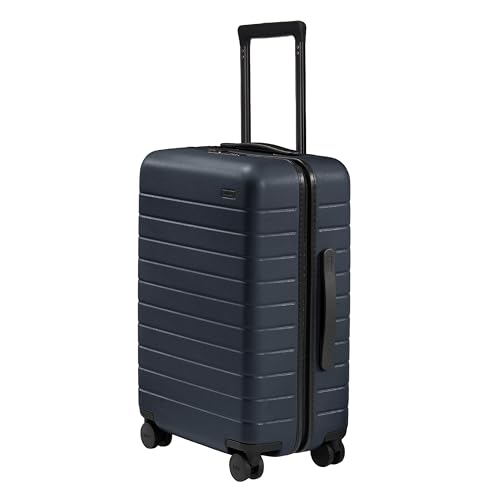
Carry on luggage 14x9x22 is one of the most common carry-on dimensions you will see in the US, and it sits right at the edge of what many airlines allow. In this guide, you will learn what those numbers actually mean, how to check whether a bag will fit your airline’s limits, and how to pick a 14x9x22 bag that holds up on real trips. The short answer: a 14x9x22 bag fits most major US carriers’ carry-on limits when measured with wheels and handles retracted, but the margin for error is small.
What 14x9x22 Actually Means
The three numbers in a luggage size listing are height, width and depth, usually given in inches. For a 14x9x22 bag, that means 14 inches tall, 9 inches wide (front to back) and 22 inches long (side to side). Manufacturers typically list the external dimensions, which include the shell, wheels and any exterior pockets, but not always the handles. Always check whether the listing says “measured with wheels” or “without wheels,” because the difference can be an inch or more.
The total linear inches of a bag are the sum of its three dimensions. Here, 14 + 9 + 22 = 45 linear inches. Many airlines use linear inches as their carry-on test, though some use only the individual dimension limits. Knowing both helps you avoid surprises at the gate.
How Carry-On Limits Compare to 14x9x22
Airline carry-on rules change, and you should always confirm the current policy on the carrier’s website before flying. As a general reference, the common US domestic limits have been in the range of 22x14x9 inches (about 45 linear inches) for many years. That makes 14x9x22 essentially the same dimensions, just listed in a different order. Some carriers and fare classes differ, and budget carriers often enforce stricter personal-item and carry-on rules.
The table below shows how to compare a 14x9x22 bag against a typical limit. Confirm your specific airline’s numbers before you travel.
| Measurement | 14x9x22 Bag | Typical Airline Limit (verify before flying) |
|---|---|---|
| Height | 14 in | About 22 in or less |
| Width | 9 in | About 14 in or less |
| Depth / length | 22 in | About 9 in or less (rotated orientation) |
| Total linear inches | 45 in | About 45 in or less |
Notice that the listing order does not always match how the bag is measured at the airport. Airlines typically measure the bag’s largest dimension as its length, so orientation matters less than the total and the individual maximums.
How to Measure Your Bag Correctly
Measuring a bag at home is the single best way to avoid a gate check. Do it with the bag fully packed as you would carry it, because soft-side bags can bulge.
Step 1: Gather your tools
- A soft tape measure or a rigid one
- A flat surface, such as a hard floor
- A notebook or phone to record the numbers
Step 2: Measure with wheels and handles in place
Extend the handle fully and measure from the bottom of the wheels to the top of the handle housing, not the very top of the extended pull handle. Then measure width and depth, including any side pockets or zippered expansion sections. Airlines measure the bag as it will be checked, so include everything that sticks out.
Step 3: Check the packed bag
Pack a realistic load, zip it closed and press gently on the sides. Soft-side bags that look compliant when empty can exceed 22 inches in height once full. If you have an expansion zipper, measure with it closed and again fully expanded.
Choosing a 14x9x22 Bag That Works in Practice
Dimensions alone do not make a good carry-on. Several other factors determine whether a 14x9x22 bag will serve you well over years of use.
Wheel type and placement
Spinner wheels (four wheels that rotate 360 degrees) glide easily through terminals and make the bag easier to steer. Two-wheel designs tend to be sturdier on rough surfaces and can hold up well under heavy loads. The two types have different trade-offs, which is covered in more depth in Spinner vs Two-Wheel Luggage: Which Rolls Better for Your Trips? You can compare your options there before choosing.
Shell material
Hard-shell bags resist crushing and keep contents protected, while soft-side bags flex and can squeeze into tight overhead spaces. If you want more context on hard-shell choices, see Polycarbonate, ABS, Polypropylene or Aluminum: Hard-Shell Luggage Materials. For a flexible option, Soft-Side Luggage: Fabrics, Expansion and Pockets explains the fabrics and expansion features in detail.
Weight of the empty bag
Empty weight matters because it eats into your weight allowance, and some carriers set limits on total carry-on weight. Lighter shells help, but very light bags can sacrifice durability. Lightweight Luggage: How Light Is Light and What You Give Up covers that trade-off.
Internal organization
A 14x9x22 bag offers limited interior space, so good compression straps, divider panels and a laptop sleeve make a real difference. Plan your packing around these features. Our Carry-On Accessories Checklist lists useful additions that help you use the space efficiently.
Packing Tips for a 14x9x22 Carry-On
- Roll soft clothing tightly rather than folding; rolled items often compress more.
- Place heavy items, like shoes and toiletry bags, near the wheels or base to keep the bag stable.
- Use packing cubes to keep layers organized and limit how much the bag bulges.
- Keep a light jacket or fleece worn on the plane rather than packed, if you need space.
- Re-measure after packing, especially if you added souvenirs on the return trip.
Common Mistakes With 14x9x22 Carry-On Bags
- Measuring only the shell. Forgetting wheels, handles or exterior pockets is the most common reason for a gate check.
- Assuming all carriers are the same. Budget carriers and some international airlines enforce stricter limits than major US carriers.
- Ignoring overpacking. A bag that measures 14x9x22 empty may exceed the limit when full.
- Buying by listing alone. Brands sometimes round or list dimensions differently; check the stated measurement method.
- Forgetting the personal item. On some flights, a backpack or tote is also counted, so plan both bags together.
Recommended gear
A few accessories make a 14x9x22 bag easier to manage and help you stay within limits.
- Soft tape measure – useful for checking width and depth on a packed bag. View on Amazon
- Packing cubes – help compress clothing and keep the bag from bulging past its listed height. View on Amazon
- Luggage scale – checks total weight so you can avoid overweight fees and stay within carry-on limits. View on Amazon
- Compression straps – cinch down clothes and reduce the bag’s expanded size. View on Amazon
FAQ
Does a 14x9x22 bag fit in most overhead bins?
Most overhead bins on major US carriers are designed to accommodate bags at this size, but bin space varies by aircraft. Arriving early improves your chances of finding room.
Are 14x9x22 and 22x14x9 the same size?
Yes, they describe the same dimensions listed in a different order: height, width, depth. The total is 45 linear inches either way.
Do wheels count toward the carry-on size?
Most airlines measure the bag including wheels and handles, so you should include them when checking whether a bag fits.
Will my bag fit under the seat?
A 14x9x22 bag is generally too large for under-seat stowage on most aircraft. Plan for overhead storage.
What if my bag is slightly over the limit?
Gate agents may require you to check it, which can mean fees and waiting at baggage claim. Re-measure and consider a slightly smaller bag if you are close.
Do I need a TSA-approved lock on a carry-on?
It depends on your preference and the bag’s design. A lock can deter casual opening, but it does not guarantee security. TSA Luggage Locks Explained: What They Do and Do Not Do describes what these locks do and do not protect against.
Can I use a 14x9x22 bag for a weekend trip?
Yes, though many people find it works best for trips of about three to five days. Pack light, and consider a Weekender Bags: Size, Materials and Carry Options style bag if you want something smaller.
Conclusion
A carry on luggage 14x9x22 is a practical, widely accepted size, but only if you measure it correctly and account for wheels, handles and how full it gets. Check your airline’s current limits, measure the packed bag, and choose a shell, wheel type and interior layout that suit your travel style. Doing those few things before you leave for the airport will keep your trip moving smoothly.
Related reading
- How to Choose Carry-On Luggage: Size Limits, Weight and Wheels
- Best Carry-On Luggage
- Weekender Bags: Size, Materials and Carry Options
- TSA Luggage Locks Explained: What They Do and Do Not Do
Ready to choose one?
About Emily Parker
Emily Parker is part of our editorial team and reviews and edits our luggage & travel tech guides, checking product details against manufacturer specifications and owner feedback.