By Emily Parker
If you are shopping for a carry-on and keep seeing the Away the carry on luggage line recommended, you probably want to know whether the brand’s approach fits how you travel. This review looks at the Away carry-on as a product category: a polycarbonate hard-shell, four spinner wheels, a built-in compression system and a Carry-On-sized footprint built around major US airline limits. It is a research-based review drawn from manufacturer specifications and common owner feedback patterns, not from our own hands-on testing. Read on to see who this suits, where it falls short and how to decide.
Product Overview
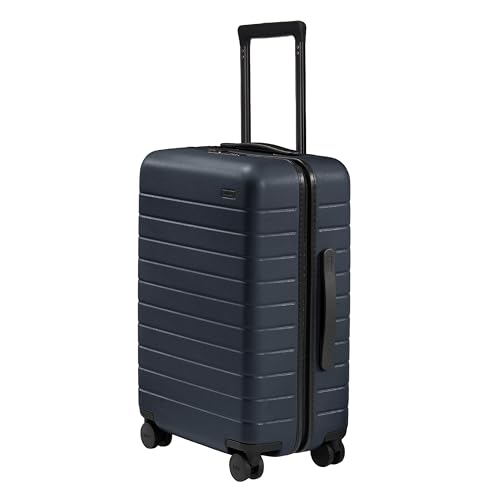
The Away carry-on is a hard-shell rolling suitcase aimed at frequent flyers and design-minded travelers who want a streamlined look and a predictable fit in overhead bins. Away sells the case in its own brand line, and the carry-on size is the one most people buy first. Its main selling points are the shell material, the spinner wheel setup, an integrated interior compression panel, and a lightweight build compared with many older hard-shell designs.
Away positions the bag as a single-piece solution for weekend trips and week-long work travel. Owners often report that the shell holds up well to scuffs but shows marks over time, which is typical for polycarbonate exteriors. The product sits in the middle of the market: more considered than basic budget luggage, but not built to the standard of professional-grade cases.
Key Features & Specifications
The table below lists the specifications most commonly published for the Carry-On size. Always check the exact figures on the product page for the model you are buying, since sizes and internal layouts can change between releases.
| Feature | What Away Specifies |
|---|---|
| Case type | Hard-shell, polycarbonate exterior |
| Wheels | Four 360-degree spinner wheels |
| Size class | Carry-On (designed to meet common airline overhead limits) |
| Closure | Zippered clamshell with TSA-approved lock |
| Interior | Compression panel, divider and zippered mesh organization |
| Handle | Telescoping aluminum handle with top carry grip |
| Power | Optional USB charging port on certain models |
Before you buy, confirm the exact linear inches and weight of the specific model against your airline’s policy. Carry-on limits vary by carrier, and the bag’s dimensions include wheels and handle, which is where many travelers get caught out.
Pros & Cons
Pros
- Polycarbonate shell resists cracking better than thin plastics when handled normally.
- Spinner wheels make it easy to pull through airports with one hand.
- Compression panel helps keep packed clothing from shifting.
- Clean, minimal exterior appeals to travelers who want a uniform look.
- Carry-On dimensions are designed to suit common overhead bin limits.
Cons
- Hard-shell exteriors show scuffs and surface marks over time.
- Interior pockets are fewer than some competing organizer-heavy designs.
- Non-expandable in the standard configuration, so you cannot add capacity on a long trip.
- Replacement parts and repairs depend on the brand’s service network.
Performance Analysis
Performance for a carry-on comes down to three things: whether it fits the bin, how it rolls and how well it protects what is inside. On fit, the Carry-On designation is built around standard overhead limits, but the exact margin depends on how full the case is and how you pack the handle and wheel housings. Owners often report that the bag fits most major US carriers without trouble, though the tightest fits are on regional jets and older aircraft.
On rolling performance, four spinner wheels generally handle smooth airport floors well. Spinners are easier to steer in tight aisles than two-wheel designs, but they can feel less stable on rough pavement or carpet. Owners frequently mention that the telescoping handle is sturdy at full extension but has a small amount of play when the bag is heavily loaded.
On protection, the polycarbonate shell is the main safeguard. Shell thickness and flex determine how the case handles drops and compression, and polycarbonate tends to flex rather than crack. The interior compression panel reduces shifting, which helps keep folded clothes neat, but it does not protect fragile items the way padded dividers or dedicated electronics sleeves do. Pack breakables in the center and surround them with soft goods.
The zipper and lock setup is worth a closer look. Zippered clamshells are common on hard cases, and the zipper is usually the first component to show wear. Check whether the zipper runs smoothly and whether the lock housing feels secure. A TSA-approved lock lets screeners open the bag without cutting it, but it does not protect against determined theft, so it should be treated as a deterrent rather than real security. For a deeper look, 5 Best Away Medium Checked Luggage Options for Your Next Trip (2026) covers this in detail.
Who Should Buy This Product?
This carry-on suits travelers who fly often, prefer a hard-shell for protection and want a streamlined, uniform look. It is a good match for business travelers who pack efficiently and carry the bag through multiple airports each month. Couples or solo travelers taking short trips will find the Carry-On size easy to manage, and the spinner wheels make it comfortable on long walks.
You should skip it if you need maximum interior organization, if you regularly pack more than a standard carry-on allows, or if you want a bag that hides scuffs. Travelers who need expandability for shopping trips or variable packing should consider soft-side options instead. Budget-focused buyers may find better value in simpler hard-shells, while those who want the most durable repair ecosystem may prefer established luggage brands with broad parts availability.
Buying Guide
Start with the size. Measure the case height, width and depth including wheels and handle, and compare that against your main airline’s carry-on limit. Many travelers forget that the rated dimensions can differ slightly from what fits in a bin on a specific aircraft. Our guide to How to Choose Carry-On Luggage: Size Limits, Weight and Wheels walks through the measurements and weight limits that matter most.
Next, decide between a spinner and a two-wheel design. Spinners give you easier maneuvering through airports, while two-wheel designs often feel more stable on uneven ground. Spinner vs Two-Wheel Luggage: Which Rolls Better for Your Trips? explains the trade-offs in more detail.
Consider the shell material as well. Polycarbonate flexes and resists cracking, while ABS is stiffer and can be more scratch-prone. Polycarbonate, ABS, Polypropylene or Aluminum: Hard-Shell Luggage Materials compares these options side by side. If you prefer a fabric exterior, Soft-Side Luggage: Fabrics, Expansion and Pockets covers the alternatives.
When you are ready to compare specific models, these well-known alternatives are worth a look:
- Samsonite Winfield 3 Hardside Carry-On, a long-standing hard-shell option with a sturdy polycarbonate build. View on Amazon
- Travelpro Crew VersaPack Carry-On, known for a large interior with multiple organization compartments. View on Amazon
- Rockland Melbourne Hardside Spinner Carry-On, a budget-friendly hard-shell with four spinner wheels. View on Amazon
Finally, pair the case with the right accessories. A small set of organizers, a luggage scale and a compact lock can make a real difference in daily use. See Carry-On Accessories Checklist for a practical list.
FAQ
Does the Away carry-on fit in overhead bins on most US airlines?
The Carry-On size is designed around standard overhead limits, but fit depends on the specific airline and aircraft. Measure the full case including wheels and handle and compare against your carrier’s published limits before you travel.
Is the polycarbonate shell durable enough for frequent travel?
Polycarbonate is a flexible, impact-resistant material, and owners often report that it handles routine airport handling well. It will still scuff and mark over time, so expect cosmetic wear with regular use.
Can I expand the bag if I need more room?
The standard Carry-On configuration is not expandable. If you need flexibility for variable packing, a soft-side bag with an expansion zipper may suit you better. See Soft-Side Luggage: Fabrics, Expansion and Pockets.
Are the spinner wheels reliable on rough surfaces?
Spinner wheels roll smoothly on airport floors and tile. On rough pavement or thick carpet, some travelers prefer two-wheel designs for stability. Our comparison in Spinner vs Two-Wheel Luggage: Which Rolls Better for Your Trips? covers this in depth.
Does the TSA-approved lock keep my belongings secure?
A TSA-approved lock allows security screeners to open the bag without cutting it, but it is a deterrent rather than full protection. Do not pack valuables you cannot afford to lose. For details, read TSA Luggage Locks Explained: What They Do and Do Not Do.
How do I avoid exceeding carry-on weight limits?
Weigh the case when packed using a portable luggage scale, and remember that many carriers have separate weight limits for carry-on bags. Empty weight matters too, so choose a lightweight shell if you pack heavily. Lightweight Luggage: How Light Is Light and What You Give Up explains the trade-offs.
Is this bag suitable for international flights?
Carry-on size limits are often stricter on international routes, especially on budget carriers. Confirm the rules for each route and consider the guidance in Choosing Luggage for International Flights.
Should I buy the Carry-On size or a larger case?
If you fly mostly with carry-on only, the Carry-On size is usually the right choice. If you need to check bags regularly, a larger case may be more practical. Checked Luggage Size Guide: Linear Inches and Weight Limits helps you compare sizes.
Final Verdict
The Away carry-on is a solid choice for travelers who want a polycarbonate hard-shell, smooth spinner wheels and a clean, predictable fit in overhead bins. Its strengths are protection, maneuverability and a streamlined design. Its trade-offs are limited expandability, modest interior organization and visible wear over time. Before you buy, confirm the exact dimensions against your airline’s limits, weigh the case when packed and decide whether a hard-shell suits your travel style. If that fits your needs, you can check the current listing here: View on Amazon.
About Emily Parker
Emily Parker is part of our editorial team and reviews and edits our luggage & travel tech guides, checking product details against manufacturer specifications and owner feedback.