By Emily Parker
Updated November 2026
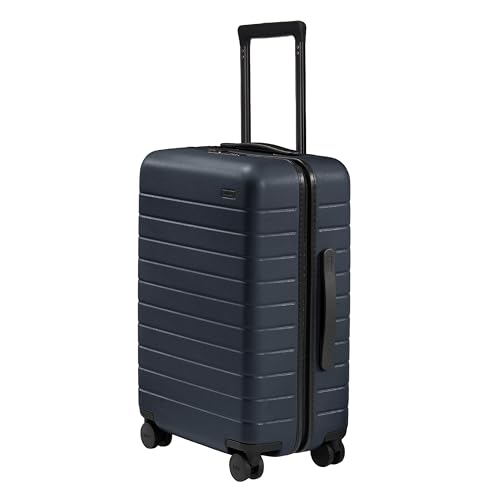
The American Tourister Cargo Max hardside spinner luggage is built for travelers who want a durable shell, four-wheel spinner mobility and enough interior room for a week or more on the road. In this guide, you will learn how to read the sizing, understand what the hardside construction actually does for you, check the wheels and handle, and decide whether a particular Cargo Max size fits your airline and your packing style. Keep the airline size rules and your own trip length in mind as you go, because those two factors matter more than any single feature.
What the Cargo Max Line Is Designed to Do
American Tourister positions the Cargo Max as a value-oriented hardside option with a spinner wheel system and a generous main compartment. Like most hardside spinners in this category, the shell is made from a molded polycarbonate-style composite, and the suitcases are typically offered in several sizes so you can match the case to your trip. Manufacturers generally describe these shells as impact-resistant and water-resistant rather than waterproof, so you should treat them as protection against everyday knocks and light rain, not as sealed containers.
Shopping for one? See our guide: American Tourister Burst Max V Hardside Spinner Luggage: Is It Worth Buying?.
Spinner luggage is different from two-wheel rolling luggage in a way that affects daily use. Spinners have four wheels that rotate 360 degrees, so the case can roll alongside you, in front of you or behind you without tipping. If you want a broader comparison of how the two designs handle, see Spinner vs Two-Wheel Luggage: Which Rolls Better for Your Trips?.
Step 1: Confirm the Size Against Your Airline
The single most important check is whether the specific Cargo Max size you are considering fits within the carry-on limits of the airlines you fly. Carry-on dimensions vary by carrier, and the published numbers are usually expressed as total linear inches (length plus width plus height) along with maximum individual dimensions. Many large US carriers use something close to 22 x 14 x 9 inches for carry-on bags, but some budget carriers are stricter and some international carriers are more generous, so check the current policy before you buy.
- Find the manufacturer’s listed exterior dimensions for the size you are considering. Note that these measurements often include wheels and handle.
- Compare the listed height, width and depth against your airline’s published carry-on maximum.
- Remember that a case can measure slightly over the limit and still be checked at the gate, so give yourself a margin of at least half an inch on each dimension if you want to avoid problems.
- If you plan to carry the case on a regional jet, check the bin size separately, since smaller aircraft often have tighter overhead space.
For a bag that fits the most restrictive common limits, the smaller Cargo Max sizes are the safer choice. The larger sizes are better suited to checked luggage or to carriers with generous carry-on allowances.
Step 2: Choose the Right Cargo Max Size for Your Trip
American Tourister sells the Cargo Max in several sizes, and matching the case to your trip length is more practical than buying the biggest one available. Packing efficiency depends on your habits, but the general guide below reflects common packing patterns rather than a fixed rule.
| Trip Length | Typical Case Size | Best Use |
|---|---|---|
| Weekend (1 to 3 days) | Smaller carry-on size | Overhead bin travel on most airlines |
| Week (4 to 7 days) | Medium size | Carry-on where allowed, or a light check-in |
| Extended (8 to 14 days) | Large size | Checked luggage on most trips |
| Long or multi-season | Largest available size | Checked luggage with a plan for weight limits |
Be aware that the largest sizes can become difficult to lift into overhead bins and can push you toward overweight fees on checked flights. Most US domestic carriers set a checked-bag weight limit that you should confirm before you pack; packing a large case to its full capacity often exceeds it.
Step 3: Evaluate the Shell and Construction
The shell is the main reason people choose hardside luggage. When you assess a Cargo Max case, look at these physical details:
- Shell material: Polycarbonate-style composites flex under pressure and tend to resist cracks better than rigid plastics. Thicker shells generally offer more protection but add weight.
- Seams and joints: The two halves of the shell should meet cleanly. Gaps or uneven seams can allow more moisture and dust inside, and they can be a sign of weaker assembly.
- Surface finish: Textured or matte finishes tend to hide scuffs better than glossy ones. Owners often report that glossy shells show marks sooner, although this varies by color.
- Interior lining: Look for a lining that is securely attached and does not separate from the shell edges.
Hardside shells resist impact well, but they do not bend the way soft-sided fabric does. Dropping a hardside case on a sharp corner can crack the shell, so pad the corners and avoid stacking heavy items on top of it in transit.
Step 4: Test the Spinner Wheels and Handle
Spinner wheels take most of the daily strain of travel, so their quality matters. Check the wheel housings and the axles, since these are where wear shows first. Manufacturers typically describe the Cargo Max wheels as spinner wheels that run smoothly on hard surfaces and carpet, but real-world rolling performance depends on the terrain.
Wheel checks
- Roll the case in a straight line and then in a tight circle. It should track straight without pulling to one side.
- Tilt the case slightly and let it roll on two wheels. The wheels should spin freely without wobbling.
- Inspect the wheel housings for gaps or loose fittings.
Handle checks
- Extend the telescoping handle fully and retract it. It should lock firmly at each stage with no rattle.
- Check the top handle and side grip for stitching or attachment points that look weak under load.
- Lift the case by the top handle with a full load to check the attachment points.
Step 5: Inspect the Zipper, Latches and Locks
Hardside cases use a combination of zippers, latches and locks, and each has its own failure points. Many hardside spinners in this class use a zipper that runs around the case to join the two shell halves, and the zipper track is often the first component to show wear.
- Zipper: Run it open and closed several times. It should glide without catching. Metal zippers tend to be sturdier than plastic coil zippers, though both can work well if the track is properly aligned.
- Latches: Check that the latches close with a firm click and that the shell does not flex excessively when closed.
- TSA-approved locks: Many American Tourister cases include locks compatible with TSA inspection. Confirm that the lock style you are getting is listed as TSA-accepted before you rely on it.
Step 6: Plan Your Packing Layout
The interior layout determines how much you can carry and how wrinkle-free your clothes will be. Hardside cases do not compress the way soft cases do, so packing efficiently makes a bigger difference.
- Use the case’s internal compression straps, if present, to hold clothes steady.
- Place heavier items near the wheels and center of the case to keep the balance stable.
- Roll soft clothes instead of folding them to save space and reduce creases.
- Use packing cubes to separate categories such as tops, bottoms and underwear.
Recommended gear
Several accessories make the Cargo Max easier to use and protect it on the road.
- Luggage scale: A handheld digital scale helps you check weight before you reach the airport, which is useful because many carriers enforce checked-bag limits strictly. View on Amazon
- Packing cubes: A set of zippered cubes keeps clothes organized inside a hardside shell, where there is no exterior pocket structure to rely on. View on Amazon
- Luggage tracker: A small Bluetooth tracker that attaches inside the case or to the handle can help you locate your bag if it is delayed or misrouted. View on Amazon
- Corner protectors: Replacement or add-on corner guards can help reduce chips on the shell if you travel with a case that will see rough handling. View on Amazon
Common Mistakes
- Buying by the largest size: A bigger case often leads to overpacking, heavier bags and checked-bag fees.
- Ignoring the airline’s carry-on rules: Check the published dimensions before you assume a case will fit in the overhead bin.
- Skipping the wheel test: Wheels that look fine in a store may wobble on a rough airport floor, so test them on different surfaces if possible.
- Overfilling the shell: Hardside cases do not bulge the way soft cases do, so forcing a lid closed can strain the zipper or latches.
- Assuming full waterproofing: Water-resistant shells still need care in heavy rain, especially at the zipper seam.
Tips for Getting the Most From Your Cargo Max
- Keep a small repair kit with spare zipper pulls and a lock key or combination record.
- Wipe the shell with a mild soap and water after trips, and let it dry fully before storing.
- Store the case upright with the handle retracted to keep the telescoping mechanism from settling into a bent position.
- Check the wheels periodically for hair or debris wrapped around the axles, which can cause uneven rolling.
FAQ
Is the American Tourister Cargo Max a carry-on size?
Some Cargo Max sizes fit typical US carry-on limits, but others are sized for checked luggage. Check the exact listed dimensions for the size you want and compare them to your airline’s current carry-on policy.
Is the Cargo Max waterproof?
Hardside shells in this category are generally described as water-resistant, not waterproof. They can handle light rain, but the zipper seam and any openings should be protected in heavy weather.
Do the spinner wheels roll well on carpet?
Spinner wheels generally roll well on smooth floors and can manage carpet, though deep or thick carpet makes any suitcase harder to pull. Performance depends on the wheel design and your terrain.
Can I expand the Cargo Max?
Not all Cargo Max sizes are expandable. Check the product specifications for the specific model, since expandable and non-expandable versions are sometimes sold under the same line name.
Is a hardside case better than a soft one for protecting contents?
Hardside shells resist crushing and punctures better than fabric, which helps protect fragile items. Soft cases can flex to fit tight spaces and often have more exterior pockets. Your choice depends on what you carry and how you travel. For a fuller comparison, see Soft Side Luggage vs Hardside: Which Should You Choose?.
How do I tell if the lock is TSA-approved?
Look for the TSA-accepted logo or a clear statement in the product listing. TSA-accepted locks can be opened by inspectors using a master key, while non-TSA locks may be cut if they are inspected.
How do I clean a hardside suitcase?
Use a soft cloth with mild soap and warm water, then rinse and dry thoroughly. Avoid harsh solvents, which can dull or stain the finish.
What should I do if the shell cracks on a trip?
Document the damage with photos and report it to the airline if the case was checked. Keep receipts and any airline claim numbers, and contact the manufacturer about warranty coverage after you return home.
Conclusion
The American Tourister Cargo Max hardside spinner luggage can suit a wide range of travelers when you match the size to your trip and your airline’s rules. Check the shell, wheels, handle and zipper before you commit, and plan your packing so the case stays balanced and within weight limits. With a sensible size choice and basic care, a Cargo Max case should give you reliable service across many trips.
Related reading
- Verdi 21 Hardside Spinner Carry On Luggage: 7 Best Picks Compared (2026)
- Travelers Choice Hardside Spinner Luggage: 4 Best Picks Compared (2026)
- Skyway Oasis 2.0 Hardside Spinner Luggage: 5 Best Picks Compared (2026)
- Samsonite Ziplite 6 Hardside Spinner Luggage Review: Pros and Cons
Ready to choose one?
About Emily Parker
Emily Parker is part of our editorial team and reviews and edits our luggage & travel tech guides, checking product details against manufacturer specifications and owner feedback.