By Emily Parker
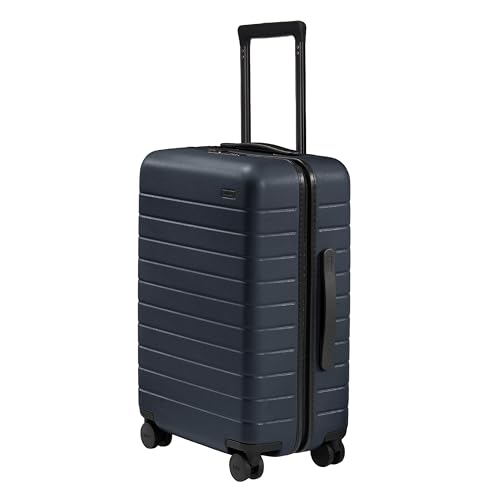
A 20-inch carry on luggage bag is the most common size for travelers who want a single bag that fits in the overhead bin without paying for a checked bag. In this guide, you will learn how to measure a 20-inch case correctly, confirm it meets airline limits, compare hardside and softside options, and avoid the mistakes that cause gate-side surprises. Most of the decisions come down to three numbers: the outside dimensions, the weight, and the usable interior space.
What “20 inch” Actually Means
The “20 inch” label on a suitcase usually refers to the height of the bag, measured from the top of the case to the bottom of the wheels or feet. That is not the same as the size airlines use. Carrier limits are given as total linear inches (height plus width plus depth), and most US carriers allow roughly 22 x 14 x 9 inches, or about 45 linear inches, including wheels and handles.
Shopping for one? See our guide: 8 Best Carry On International Luggage for Long-Haul Trips.
Because of this, a bag marketed as 20 inches tall can still be too big in depth or width once wheels and handles are added. Always check the manufacturer’s listed external dimensions, not just the headline size. Manufacturers specify these numbers, and they are the figures you should compare against your airline’s policy.
Step 1: Check Your Airline’s Carry-On Limits
Start with the airline you fly most often, because limits vary. Carrier policies change, so confirm the current figures on the airline’s website before you buy. Many budget carriers have stricter limits or charge for bags that exceed their personal item or carry-on rules.
For a broader comparison of how these rules differ, see Carry-On Luggage American Airlines: Size Limits and Tips for 2026 and Carry On Luggage for Southwest Airlines: Size Limits and Tips (2026). If you fly internationally, the rules on European carriers are often tighter, which is covered in European Carry-On Luggage Size: 9 Best Picks for Tight Airline Limits.
Step 2: Measure the Bag the Right Way
Do not rely on the size printed on a product listing alone. Measure the bag yourself once you have it, using a flexible tape measure. Follow these steps:
- Extend the handle fully and set the bag upright on a flat surface.
- Measure height from the bottom of the wheels to the top of the bag, including the handle if it sits on top.
- Measure width from side to side at the widest point, including any side pockets or protruding zippers.
- Measure depth from front to back, including the wheel housing.
- Add the three numbers together and compare against your airline’s total.
Measure with the bag empty and then again when packed. Soft bags can bulge past their listed dimensions when full, which is a common reason gate agents ask travelers to check a bag.
Step 3: Consider Weight and Empty Bag Mass
Many carriers do not enforce a weight limit on carry-ons, but some do, and the lighter your bag is when empty, the more you can pack before you hit a limit. Empty weights for 20-inch bags vary widely depending on materials. Hardside polycarbonate shells are often heavier than lightweight softside nylon or polyester bodies.
Look for the listed empty weight in the specifications. If you plan to pack heavily, a lighter shell gives you more room in your weight budget, especially on routes where the airline checks.
Hardside vs. Softside
Hardside cases resist cracks and keep their shape, which protects fragile items. Softside cases tend to expand slightly, which can add usable space, and they often include exterior pockets for quick access. Softside bags with compression panels let you cinch down contents to stay within a strict limit. For a closer look at one example of a hard shell, see Rimowa Luggage Carry On Review: Features and Performance, and for a softside option with a different approach to structure, see Samsonite Carry On Luggage Review: Features and Performance.
Wheel Type and Interior Space
Four-wheel spinner bags roll smoothly in any direction and are easier to steer through crowded terminals. Two-wheel rolling bags are typically sturdier on rough pavement and have a lower profile, which can leave a little more interior depth. Wheels take up space inside the outer dimensions, so a spinner with the same listed size may hold a few liters less than a two-wheeler.
Step 4: Compare Usable Capacity
Capacity is listed in liters, but the usable space depends on the layout. Look for interior compression straps, a divided main compartment, and a zippered front or lid pocket. A 20-inch bag often falls in the 35 to 45 liter range, though specifications vary by manufacturer.
| Factor | What to Look For | Why It Matters |
|---|---|---|
| External size | Total under your airline’s limit | Avoids gate checks |
| Empty weight | Lighter when possible | Leaves room for packed items |
| Shell type | Hard or soft, based on protection needs | Affects impact resistance and flexibility |
| Wheels | Spinner or two-wheel | Controls maneuverability and wear |
| Interior layout | Compression straps and dividers | Keeps packing organized and compact |
Step 5: Test the Fit Before You Travel
Once your bag arrives, pack it to near-full capacity and run a quick fit test. Stand it on a hard floor, lift the handle, and check that the wheels and zippers still close. Then try your airline’s sizer if one is available at the airport, or use a rigid frame at home sized to your carrier’s limit. Zippers that bulge or lids that will not close are signs the bag is overpacked for its frame.
Common Mistakes
- Trusting the headline size. A bag labeled 20 inches can still exceed carry-on depth or width once wheels are included.
- Measuring only when empty. Softside bags can bulge when packed.
- Ignoring wheel housing. Spinner wheels add depth you may not expect.
- Overpacking heavy items. Dense shoes and toiletries add weight quickly.
- Skipping the policy check. Airline rules change, and budget carriers sometimes differ from full-service ones.
Tips for Choosing Your 20-Inch Bag
- Pick the bag after checking your most restrictive airline, not your favorite one.
- Choose a lightweight shell if you pack heavy or fly frequently.
- Look for a front pocket or lid organizer so you can reach a laptop or documents without unpacking.
- Use packing cubes to keep the interior tidy and compressible.
- Read the manufacturer’s dimensions and compare them with an actual tape measure reading.
Recommended gear
A few accessories make a 20-inch bag easier to manage at the airport and on the plane.
- Packing cubes. Compress clothing into organized sections so you can fit more into a fixed interior. View on Amazon
- Flexible tape measure. A soft measuring tape lets you confirm the bag’s exterior size before you fly. View on Amazon
- Luggage scale. A handheld digital scale helps you confirm weight before you reach the gate. View on Amazon
- Luggage strap. A strap with a built-in scale can help you find the weight of a packed bag and keep it secure while traveling. View on Amazon
FAQ
Is a 20-inch bag always a carry-on?
Not always. Many airlines allow about 22 x 14 x 9 inches including wheels and handles, so a 20-inch height may still exceed the depth or width limit. Check the full external dimensions against your airline’s policy.
How many linear inches is a 20-inch carry-on?
Dimensions vary by brand, but a typical 20-inch case measures roughly 20 x 14 x 9 inches, which totals about 43 linear inches. Confirm the actual measurements for your specific bag.
Do airlines weigh carry-on bags?
Most US carriers do not enforce a carry-on weight limit, but some do, and policies change. Check your airline’s rules before you fly, especially on budget routes.
Will a 20-inch bag fit in the overhead bin?
It often does if it meets your airline’s size limits, but bin space varies by aircraft. Gate agents may ask you to check a bag if overhead space runs out, so board early if you can.
Is hardside or softside better for a 20-inch carry-on?
It depends on your priorities. Hardside shells offer better impact protection and keep their shape, while softside bags often have exterior pockets and can flex to fit tight spaces.
Should I buy a spinner or a two-wheel bag?
Spinners are easier to steer through crowded terminals. Two-wheel bags usually roll more steadily over rough surfaces and can offer slightly more interior depth for the same outer size.
How can I tell if my bag is too big before I reach the airport?
Measure the bag fully packed, including wheels and handles, and compare the total to your airline’s limit. Some airlines also publish a sizer or guidance on their websites.
Conclusion
A 20-inch carry on luggage bag can work well for many trips, but only if its full external size fits your airline’s limits. Measure the bag yourself, check the weight, and compare the interior layout to how you pack. Confirming these details before you buy will save you from a gate-side surprise. For help with the rest of your gear, our guide to How to Choose Carry-On Luggage: Size Limits, Weight and Wheels covers the broader decision.
Ready to choose one?
About Emily Parker
Emily Parker is part of our editorial team and reviews and edits our luggage & travel tech guides, checking product details against manufacturer specifications and owner feedback.