By Emily Parker
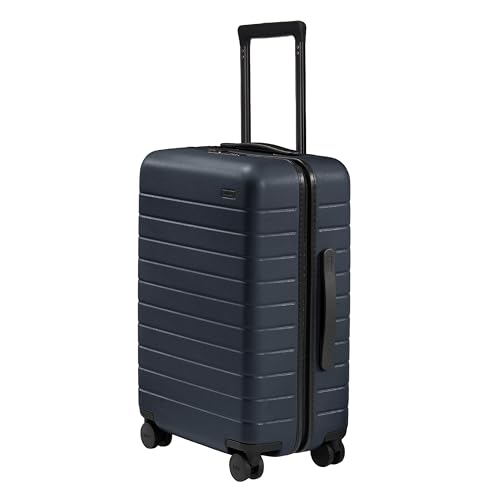
If you want to know the carry on luggage size for Delta, the short answer is that most standard carry-on bags need to fit within 22 x 14 x 9 inches (56 x 35 x 23 cm) including wheels and handles, and the bag should weigh no more than about 50 pounds. This guide walks you through those numbers, explains how Delta and other carriers enforce them, and shows you how to measure and check your bag before you reach the gate. By the end, you should know whether your bag will clear the sizer and what to do if it doesn’t.
Delta carry-on size limits at a glance
Delta publishes a maximum carry-on size that applies to its mainline flights in the United States. Those dimensions are commonly cited as 22 x 14 x 9 inches, and the measurement includes wheels, handles and any exterior pockets or protrusions. Bags that exceed this size can be asked to go into the cargo hold at the gate, which may mean a fee for checked baggage if you have not already paid for it.
Shopping for one? See our guide: Protege Carry On Luggage: 7 Best Picks for Airline Size Limits (2026).
Delta also expects carry-on bags to be reasonably manageable by you. Weight limits are not always enforced at the gate in the same way as size, but many travelers are still asked to lift a bag into the overhead bin, and a heavy suitcase is more likely to be pulled if the crew feels it is unsafe to stow. Manufacturers typically specify weight limits for their own products, so check the label or product page for the exact figure.
Keep in mind that Delta regional aircraft, such as smaller jets, often have smaller overhead bins than mainline planes. Even a bag that technically meets the posted dimensions may be gate-checked on a regional flight if the bins are full or the bag does not slide in easily. If your itinerary includes a regional leg, aim for a bag on the smaller side of the limit.
How to measure your carry-on correctly
Measuring a suitcase sounds simple, but many travelers measure only the body and forget the wheels or the handle. Use the following steps to get an accurate figure.
- Empty the bag and extend the handle fully only if you plan to, since most airline sizers are checked with the handle retracted.
- Measure height from the bottom of the wheels to the top of the bag, including any top handle or protruding hardware.
- Measure width from side to side at the widest point, including side pockets and zippers when they are closed.
- Measure depth from the front to the back, including the front pocket and any bulges.
- Compare your totals against 22 x 14 x 9 inches. Round up rather than down if you are close.
Tools you will need
- A flexible tape measure, ideally one that reads in inches and centimeters.
- A helper to hold the tape straight across a fully packed bag.
- A notepad or phone to record your three measurements.
Weight, wheels and bag design
Dimensions get most of the attention, but design choices affect how much usable space you get inside the limit. Wheels are the biggest variable. Four-wheel spinners stand out from the body of the bag, so a spinner that is 22 inches tall overall may leave less interior room than a two-wheel rolling bag of the same listed size. Two-wheel designs tend to sit flatter, and some travelers prefer them for that reason.
Soft-sided bags usually have a little give, which can help them squeeze into a tight bin or past a sizer. Hard-shell bags hold their shape but do not compress. If you regularly fly on full flights, a softer shell may be easier to stow. Expandable bags can be useful, but only if you collapse them to the base size when boarding. Gate agents will typically measure the bag in its fully expanded state if it appears to be over size.
For weight, check your bag before you leave home. A typical carry-on that is empty can weigh several pounds, so a bag that looks lightweight can still become heavy once packed. Weigh your bag with a luggage scale, then decide whether to remove items if you are close to the manufacturer’s stated limit.
Comparison: common carry-on sizes and what they mean for Delta
| Bag type | Typical listed dimensions | Delta fit notes |
|---|---|---|
| Standard carry-on (spinner) | 22 x 14 x 9 in | Right at the limit; wheels add depth, so measure carefully |
| Standard carry-on (two-wheel) | 22 x 14 x 9 in | Often easier to fit on regional jets |
| Compact carry-on | About 20 x 13 x 8 in | Good margin for tight bins and regional flights |
| Duffel or weekender | Varies widely | Check the total of all three dimensions, including straps and pockets |
What to do if your bag is too big
If your bag is slightly oversized, you have a few options. The simplest is to repack so the bag sits lower and flatter, sometimes removing a bulky item that pushes out the sides. You can also deflate a soft-sided bag, unzip any expansion panels, or tuck away a removable exterior pocket. If none of that works, consider a smaller bag for future trips, or check a bag in advance so you are not surprised at the gate.
Checked bags have their own size and weight limits, and those rules differ from carry-on rules. If you need to check luggage, review the guidance in our guide to Checked Luggage Size Guide: Linear Inches and Weight Limits before you pack. Overweight or oversized checked bags can incur additional fees, so confirm the numbers in advance.
Recommended gear
A few inexpensive tools make it easier to confirm your bag will fit before you get to the airport.
- Flexible tape measure: Lets you measure height, width and depth including wheels and handles, which is where most sizing mistakes happen. View on Amazon
- Portable luggage scale: Shows your packed weight so you can stay within the manufacturer’s limit before you leave home. View on Amazon
- Luggage sizer frame: A printed or metal frame that approximates airline sizers so you can test a bag at home. View on Amazon
Common mistakes
- Measuring the bag body without wheels, handles or exterior pockets.
- Assuming a bag listed as “carry-on size” will fit every aircraft and every bin.
- Overpacking a soft bag so it bulges beyond its base dimensions.
- Forgetting that regional jets can have smaller bins than mainline planes.
- Waiting until the gate to find out your bag is oversized.
Tips for a smoother check-in
- Measure your bag at home with the handle retracted and any expansion zippers closed.
- Choose a bag that gives you a margin of an inch or so on each side, if you can.
- Keep your most valuable items and medications in your personal item, not the carry-on, in case the carry-on is gate-checked.
- Check the carrier’s current policy before each trip, since rules can change.
If you are still comparing options, our overview of How to Choose Carry-On Luggage: Size Limits, Weight and Wheels covers the trade-offs between hard and soft shells, and Carry On Luggage 22 X 14 X 9: Size Limits, Fit and Airline Rules explains how that standard size works across carriers.
FAQ
What is the maximum carry-on size for Delta?
Delta’s commonly cited carry-on limit is 22 x 14 x 9 inches, including wheels and handles. Check Delta’s current website before you fly, since policies can be updated.
Does the weight of my carry-on matter on Delta?
Weight is less consistently enforced at the gate than size, but a very heavy bag may be difficult to lift into a bin and could be gate-checked. Follow the weight limit printed by the bag’s manufacturer.
Do wheels count toward the carry-on size?
Yes. Airline measurements generally include wheels, handles and any protruding exterior parts, so the total height and depth should be measured to the outermost edges.
Will a 22 x 14 x 9 bag always fit in the overhead bin?
Not always. Bin sizes vary by aircraft, and a bag that meets the dimensions can still be difficult to stow if other passengers have filled the space. Regional jets are more likely to have tight bins.
Is a personal item the same as a carry-on for Delta?
No. A personal item, such as a backpack or small tote, is a separate allowance that must fit under the seat in front of you. It is usually much smaller than a carry-on.
What happens if my carry-on is too big at the gate?
The gate agent may ask you to check the bag, which can involve a fee if you have not already paid for a checked bag. Keeping essentials in your personal item can help you avoid problems.
Can I use a luggage sizer at home?
Yes. A home sizer or frame gives you a quick check, but it is still worth measuring your bag with a tape measure, especially if your bag is close to the limit.
Conclusion
For most travelers, the carry on luggage size for Delta is 22 x 14 x 9 inches including wheels and handles, with weight managed to the manufacturer’s stated limit. Measure your bag with the handle retracted, account for wheels and pockets, and leave yourself a small margin. Doing those checks at home will save you time and reduce the chance of a gate-check at the last minute.
Related reading
- European Carry-On Luggage Size: 9 Best Picks for Tight Airline Limits
- Carry-On Luggage American Airlines: Size Limits and Tips for 2026
- Carry On Underseat Luggage: Sizes, Fit and Airline Rules (2026)
Ready to choose one?
About Emily Parker
Emily Parker is part of our editorial team and reviews and edits our luggage & travel tech guides, checking product details against manufacturer specifications and owner feedback.