By Emily Parker
Shoppers looking for carry on luggage hardside options usually want the same thing: a shell that protects fragile items, stays within airline size limits, and rolls without strain through busy terminals. A hardside case can handle a crowded overhead bin and the occasional rough baggage handler better than most soft-sided bags, but it also tends to weigh more and offers less give when you need to squeeze in an extra sweater. This guide compares nine popular hardside carry-on designs so you can match a shell to your trip length, packing style and travel habits. Every pick was chosen by comparing manufacturer specifications, brand reputation and the patterns owners commonly describe in their reviews. We did not test these bags ourselves, so check the dimensions against your specific airline before you buy.
Our Top Picks
Quick Comparison
| Product | Best for | Key feature |
|---|---|---|
| Samsonite Winfield 3 DLX Hardside Spinner | Travelers who want a durable, well-known brand with a classic look | Polypropylene shell with an expandable zipper section |
| Travelpro Maxlite 5 Hardside Spinner | Frequent flyers who prioritize a light, airline-friendly carry-on | Lightweight polycarbonate-blend shell with a pilot-style handle |
| Samsonite Freeform Hardside Spinner | Travelers who value a sleek profile and quiet rolling | Polypropylene shell with a built-in expansion zipper |
| Away The Carry-On | Design-minded travelers who want a streamlined interior | Polycarbonate shell with a built-in USB charging port |
| Samsonite Omni PC Hardside Expandable Spinner | Long weekend and week-long trips that need extra room | Expandable polycarbonate shell with a laptop-friendly interior |
| Delsey Helium Aero Hardside Carry-On | Travelers seeking a lightweight, flexible hardside option | Aero-shell design with a light, tough build |
| Rockland Melbourne Hardside Expandable Spinner | Budget-conscious shoppers who still want a hardside shell | Polypropylene shell with a budget-friendly build |
| Travelpro Platinum Elite Hardside Carry-On | Business travelers who need organized packing space | Multiple compartments and a wide-opening clamshell |
| Samsonite Lite-Shock Sport Hardside Spinner | Active travelers who want a rugged, impact-resistant shell | Shock-absorbing shell with a rugged exterior |
Samsonite Winfield 3 DLX Hardside Spinner
This is a good fit for travelers who want a familiar, widely available hardside spinner from an established brand. Owners often describe it as a solid all-around carry-on for weekend and week-long trips.
Key specs
- Polypropylene shell
- Four multidirectional spinner wheels
- Expandable zipper section for extra packing space
- Built-in TSA-approved combination lock
Pros
- Well-known brand with broad availability
- Polypropylene shell resists scuffs better than many thin shells
- Expansion adds packing room when you need it
Cons
- Expanded capacity can push it past some airline carry-on limits
- Heavier than the ultralight options on this list
Travelpro Maxlite 5 Hardside Spinner
Frequent flyers who count every pound will likely appreciate this option. It is built for travelers who want a lightweight shell that still meets standard carry-on dimensions.
Key specs
- Lightweight polycarbonate-blend shell
- Four spinner wheels
- Pilot-style telescoping handle
- Standard carry-on dimensions
Pros
- Light weight leaves more room for your weight allowance
- Pilot-style handle is easy to maneuver
- Fits common carry-on size limits
Cons
- Thinner shell can show dents more readily than heavier shells
- Interior organization is simpler than premium business cases
Samsonite Freeform Hardside Spinner
Travelers who value a clean, modern look and quiet rolling will find this a sensible choice. It suits people who want a hardside case that feels refined without a premium price focus.
Key specs
- Polypropylene shell
- Four spinner wheels
- Expansion zipper for extra capacity
- Integrated TSA-approved lock
Pros
- Sleek profile with a modern appearance
- Polypropylene shell is flexible and impact-tolerant
- Smooth spinner wheels roll quietly on hard floors
Cons
- Expansion feature adds depth that may exceed some airline limits
- Interior compartments are fewer than in organizer-style cases
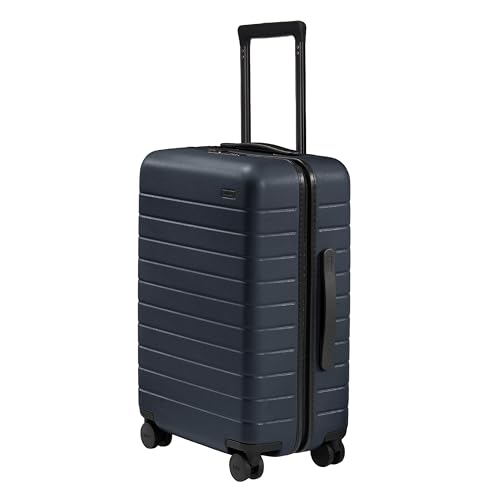
Away The Carry-On
Design-minded travelers who want a streamlined interior and built-in charging convenience often gravitate toward this case. It is a strong option for short business trips and carry-on-only travel.
Key specs
- Polycarbonate shell
- Four spinner wheels
- Built-in USB charging port
- Compression straps and internal dividers
Pros
- Built-in USB port supports device charging on the go
- Clean, minimalist interior layout
- Polycarbonate shell offers good impact resistance
Cons
- Built-in electronics add a point of potential failure over time
- Limited expansion compared with expandable models
Samsonite Omni PC Hardside Expandable Spinner
This case suits travelers who need a bit more space for week-long trips but still want a hardside shell. The expandable design gives flexibility when you pack for variable weather or souvenirs.
Key specs
- Polycarbonate shell
- Four spinner wheels
- Expandable zipper section
- Padded laptop compartment in some configurations
Pros
- Polycarbonate shell offers strong impact resistance
- Expansion adds meaningful packing room
- Laptop-friendly interior helps with business travel
Cons
- Expanded depth may exceed strict carry-on size rules
- Heavier than lightweight alternatives
Delsey Helium Aero Hardside Carry-On
Travelers seeking a lightweight, flexible hardside shell that handles rough handling well may find this design appealing. It is a practical pick for people who check their bags frequently or pack for quick trips.
Key specs
- Aero-shell hardside construction
- Four spinner wheels
- Standard carry-on dimensions
- Internal compression system
Pros
- Light build helps keep total weight low
- Flexible shell can absorb minor bumps
- Compression system helps keep contents organized
Cons
- Interior space is less generous than expandable models
- Some owners report wheels wear faster with heavy loads
Rockland Melbourne Hardside Expandable Spinner
Budget-conscious shoppers who still want a hardside shell will find this a reasonable starting point. It works well for occasional travelers who do not need premium materials or advanced features.
Key specs
- Polypropylene shell
- Four spinner wheels
- Expandable zipper section
- Telescoping handle
Pros
- Affordable budget-friendly option within hardside cases
- Expansion provides extra space for longer trips
- Simple, no-frills design is easy to use
Cons
- Build quality may not match premium brands over years of heavy use
- Fewer organizational features than business-focused cases
Travelpro Platinum Elite Hardside Carry-On
Business travelers who need organized packing space and easy access to their clothes will appreciate this layout. The wide-opening clamshell design makes it easier to see and reach everything at once.
Key specs
- Hardside shell with a clamshell opening
- Four spinner wheels
- Multiple internal compartments
- Pilot-style handle
Pros
- Clamshell opening gives full access to contents
- Multiple compartments help keep clothes and accessories separate
- Smooth-rolling wheels handle airport floors well
Cons
- Clamshell layout is wider and can be harder to fit in tight bins
- Heavier than minimalist hardside options
Samsonite Lite-Shock Sport Hardside Spinner
Active travelers who want a rugged, impact-resistant shell for adventures and rough terrain may find this model a good match. It suits people who expect their luggage to face more bumps than a typical business trip.
Key specs
- Shock-absorbing polypropylene shell
- Four spinner wheels
- Rugged exterior finish
- Telescoping handle
Pros
- Shock-absorbing shell is designed to handle impacts
- Rugged finish hides scuffs well
- Good choice for active or outdoor-focused trips
Cons
- Sporty styling may not suit business settings
- Fewer interior organizing features than premium cases
Buying Guide
Selection criteria
Choosing a carry on luggage hardside case starts with three questions: Will it meet your airline’s carry-on dimensions? Does the shell material suit how you travel? And does the internal layout match how you pack? Most of the options above are designed to fit standard carry-on limits, but expandable models can grow past those limits when fully opened. Treat the expansion feature as a bonus you use only when your airline allows it.
Important features
Shell material is the main difference between hardside cases. Polypropylene shells tend to flex and resist scratches, while polycarbonate shells are stiffer and often more impact-resistant. Some designs use blends or proprietary compounds, so read the material description carefully. For a deeper look at the trade-offs, see Polycarbonate, ABS, Polypropylene or Aluminum: Hard-Shell Luggage Materials.
Wheel style matters too. Four multidirectional spinner wheels make it easier to steer through crowded terminals, while two-wheel designs can feel more stable on rough surfaces. Spinner vs Two-Wheel Luggage: Which Rolls Better for Your Trips? explains which setup suits different routes.
Specs to check
- External dimensions: Compare the height, width and depth against your airline’s posted limits. Many airlines list maximums in inches or centimeters that include wheels and handles.
- Empty weight: Lighter cases leave more of your allowance for packed items. Check the listed weight before you buy.
- Expansion depth: If the case expands, note how many inches it adds and whether your airline allows the expanded size.
- Lock type: Built-in TSA-approved locks let inspectors open the case without breaking it. For details, see TSA Luggage Locks Explained: What They Do and Do Not Do.
Choosing by need
If you fly often and value weight savings, prioritize a lightweight shell with standard dimensions. If you pack for longer trips, an expandable case gives you flexibility, but make sure you can pack it compactly when expansion is not allowed. Business travelers often benefit from clamshell layouts and dedicated laptop sleeves. Active travelers may prefer rugged, impact-resistant shells. For more guidance on matching luggage to trip type, see How to Choose Business Luggage for Frequent Trips and Choosing Luggage for Long Trips: Durability and Repairability.
Things to watch out for
Hardside cases can show scuffs and dents over time, though many owners find that the marks do not affect function. Expansion zippers can wear with heavy loads, so avoid overstuffing when the case is closed. Also check whether the case is labeled carry-on in all dimensions; some airlines have stricter rules on expanded depth or total weight. Finally, if you pack fragile items, consider a few soft pouches inside to prevent rattling.
FAQ
What size is a standard carry-on hardside case?
Most US airlines allow carry-ons up to about 22 by 14 by 9 inches, including wheels and handles, though some carriers use slightly different limits. Always check your airline’s website before you travel, since rules can change and budget carriers often enforce stricter limits.
Are hardside carry-on bags better than soft-sided ones?
Hardside cases generally offer more protection for fragile items and resist moisture well. Soft-sided bags often have more flexibility and external pockets. The better choice depends on what you pack and how much you value protection versus flexibility. For another angle, check out Samsonite Evolve SE Hardside Expandable Luggage Review: Is It Worth It?.
Does an expandable hardside case still count as a carry-on?
It depends on the airline and whether you expand the case. Many carriers measure the bag in its closed position, but some enforce limits on expanded dimensions too. Check your airline’s policy before you fly with an expanded case.
Is polypropylene or polycarbonate better for a hardside carry-on?
Polypropylene is typically more flexible and better at hiding scuffs, while polycarbonate is usually stiffer and resists impacts well. Neither is universally better; choose based on whether you prioritize flex or rigidity.
Can I use a hardside carry-on on budget airlines?
Budget carriers often have stricter size and weight rules than major airlines, and fees may apply for oversized bags. Measure your case carefully and confirm the carrier’s limits before booking. For more on size rules, see Checked Luggage Size Guide: Linear Inches and Weight Limits.
How do I keep a hardside case from getting scratched?
Store the case in a padded bag when you are not traveling, and use a luggage cover or tag to make it easier to spot. Minor scuffs are normal, but a soft microfiber cloth can remove surface dirt without scratching the shell.
Should I buy a lock for my hardside case?
A TSA-approved lock can help deter casual tampering and lets security staff open the case if needed. Locks do not prevent theft by determined people, so avoid valuables in checked bags regardless. For more options, see Best TSA Luggage Locks.
Conclusion
For most travelers, a carry on luggage hardside case should match the airline’s size rules, the shell material you prefer and the way you pack. The Travelpro Maxlite 5 suits frequent flyers who want a light, standard-size shell. The Samsonite Omni PC works well for trips that need more room, provided you stay within your airline’s limits. Business travelers may prefer the organized layout of the Travelpro Platinum Elite, while active travelers may favor the rugged Samsonite Lite-Shock Sport. Compare dimensions and weights against your airline’s rules before you choose. For broader comparisons, browse Best Hard-Shell Luggage and Best Carry-On Luggage.
About Emily Parker
Emily Parker is part of our editorial team and reviews and edits our luggage & travel tech guides, checking product details against manufacturer specifications and owner feedback.