By Emily Parker
Rimowa is one of the best-known names in premium hard-shell luggage, and its carry-on cases are often the first thing frequent flyers picture when they think about rimowa luggage carry on options. This review looks at what the line offers, how the aluminum and polycarbonate models compare, and where the brand’s strengths and weaknesses lie. It is based on manufacturer specifications and patterns in owner feedback, not on hands-on testing. Buy a Rimowa carry-on if you want a rigid, well-built shell that protects fragile items, you value a long-established repair network and you fly often enough to justify the investment. Skip it if you mainly want maximum packing capacity for the money, you check bags frequently and want something you will not worry about scuffing, or your trips are occasional and a less expensive hard shell will serve you just as well.
Product Overview
Rimowa, a German company founded in 1898 and now part of the LVMH group, produces hard-shell suitcases in several families. The carry-on models most people mean when they search for rimowa carry on luggage fall into two main lines: the classic ridged aluminum shell and the lighter polycarbonate Essential and Original-style cases. Both use a single-piece body with an internal frame, a fixed or expandable interior, and four wheels on most sizes. The company sells through its own stores, its website and select retailers, and it is also available through Amazon US, where size and color availability can shift over time.
The appeal is partly visual. The grooved aluminum surface is instantly recognizable, and the brand has built a reputation around the idea that a suitcase can be both functional and a design object. Owners tend to describe the experience of rolling and opening the case as solid and precise, with latches and hinges that feel more substantial than those on mid-range hard shells. Whether that justifies the premium is a question of priorities, and the sections below work through it.
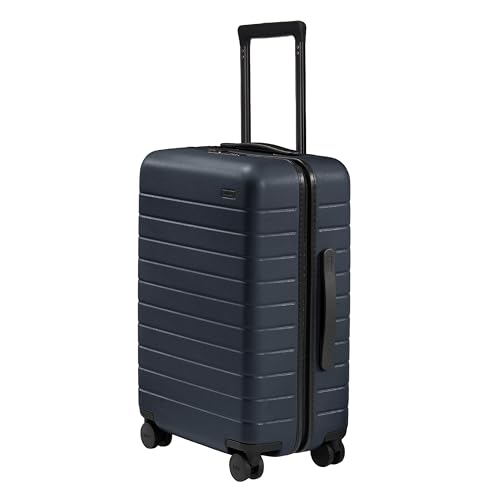
Because “carry on luggage rimowa” is a phrase people use when comparing this brand to others, it helps to be clear about what you are buying. A Rimowa carry-on is a rigid, four-wheeled case built to fit within common airline carry-on dimensions. It is not a soft-side bag with compression straps, and it is not a backpack. Its strengths are protection, structural stability and resale and repair support. Its trade-offs are weight relative to some polycarbonate competitors and a smaller interior than some expandable models of the same external size.
Key Features & Specifications
The table below summarizes figures the manufacturer typically publishes for its carry-on sizes. Confirm exact numbers on the specific model’s product page before buying, since Rimowa revises dimensions and weights between generations.
| Feature | What Rimowa Specifies (typical carry-on) | Why It Matters |
|---|---|---|
| External height | About 21.7 to 22 inches | Most US airlines cap carry-on height at 22 inches including wheels and handle, so this sits close to the limit. |
| External width | About 14 to 15 inches | Width is usually around 14 inches on the classic aluminum cabin size. |
| External depth | About 9 inches | Depth determines whether the case fits in overhead bins on regional jets. |
| Shell material | Anodized aluminum or polycarbonate | Aluminum resists dents better than most plastics; polycarbonate is lighter. |
| Wheels | Four multidirectional spinner wheels | Spinners let you pull the case upright and reduce strain on your wrist. |
| Interior | Fabric-lined, often with a divider or compression elements depending on model | Organization matters more in a rigid case, which does not flex to accommodate bulk. |
| Locks | Integrated combination lock on many models | Check whether your chosen model accepts TSA-recognized locks. |
| Warranty | Limited manufacturer warranty; check current terms | Coverage terms differ by model, region and purchase channel. |
Owners who compare these numbers to other rigid cases often note that the Rimowa external dimensions are close to the same envelope as competing hard shells, so the difference in usable capacity comes down more to wall thickness and internal layout than to external size. If you plan to take the case on a regional jet, measure the bin space in your usual aircraft before you assume it will fit, and keep in mind that airline rules vary.
For a broader look at how dimensions and weight limits work across carriers, see How to Choose Carry-On Luggage: Size Limits, Weight and Wheels. If you are deciding between the aluminum and polycarbonate options, Polycarbonate, ABS, Polypropylene or Aluminum: Hard-Shell Luggage Materials explains how each material handles impact, flex and weight.
Pros & Cons
Pros
- Rigid aluminum and polycarbonate shells protect contents from crushing and compression better than most soft-side bags.
- Four spinner wheels make the case easy to steer through terminals and cobblestones.
- Well-finished hardware, including latches and hinges, is a common point of praise in owner reviews.
- The brand has a long history and a repair infrastructure that many competitors do not match.
- The recognizable design holds its appearance well when cared for, and many owners treat the case as a long-term purchase.
Cons
- Aluminum models are heavier than most polycarbonate alternatives, which can matter when airlines enforce strict weight limits.
- The price is high relative to the usable interior, so budget-minded travelers can get more packing space elsewhere.
- Hard shells have no outer pockets, so you will need packing cubes or a separate personal item for organization.
- Scuffs and fine scratches on the anodized surface are visible, and some owners find repair or refinishing a hassle.
- Expansion is limited on most fixed-size models, so you cannot add room for souvenirs as easily as with expandable soft-side bags.
Performance Analysis
Performance for a rigid carry-on is less about raw speed and more about how the case behaves under the situations travelers actually face: crowded jetways, uneven pavement, overhead bin slams and the occasional baggage handler who is not gentle. Based on manufacturer descriptions and recurring themes in owner feedback, the aluminum shell does well at resisting punctures and deep dents, though it will show surface marks over time. Polycarbonate models tend to flex slightly under pressure, which some owners prefer because it absorbs shock rather than transferring it to the contents, while others find the surface more prone to fine scratching.
Wheel performance is generally described as smooth, with the spinners tracking straight when pulled and turning easily in tight spaces. Owners who use the cases on cobblestones or gravel frequently report that the wheel housings hold up, but they also mention that replacing a worn wheel on a premium case costs more time than swapping one on a budget suitcase, so it is worth checking that a service path exists in your region before you buy.
Interior organization is where many buyers feel the most trade-off. Rigid cases do not compress well, so a half-full bag shifts and can wrinkle clothing if you do not pack carefully. Using compression sleeves or packing cubes helps, and most owners treat the interior as a place to plan rather than a place to toss things. Weight is another consideration: aluminum models sit at the heavier end of the carry-on range, and if you routinely fly carriers with strict weight enforcement, a polycarbonate option may leave more room for your packed load.
Who Should Buy This Product?
A Rimowa carry-on suits travelers who value protection and longevity above every other factor. Frequent flyers who check their carry-on at the gate, people carrying camera equipment, laptops or fragile gifts, and anyone who expects to use one case for many years are the most natural fits. Business travelers who appear in client-facing settings may also appreciate the polished look.
It is less well suited to first-time flyers, occasional travelers or anyone who prioritizes maximum packing volume per dollar. If your trips are mostly short and you rarely reach your bag’s weight limit, a less expensive hard shell or a well-designed soft-side bag may serve you better. Families buying several cases at once can also find that mixed sizes and materials make matching sets more complicated, which is covered in How to Choose Luggage for Family Trips.
Buying Guide
Start with the airline you fly most often. Check the current carry-on height, width, depth and weight limits on its website, because published limits differ and enforcement at the gate can vary. Measure your chosen Rimowa model with the wheels and handle in place, and compare the figure to the airline’s cap. Leave a little margin, since a case that measures exactly at the limit can still be turned away after handle or wheel housing expansion.
Decide between aluminum and polycarbonate based on how you travel. Aluminum offers a distinctive look and strong resistance to dents, but it adds weight. Polycarbonate is lighter and more flexible under impact, though it is more likely to show fine surface scratches. Our guide to Lightweight Luggage: How Light Is Light and What You Give Up shows how much weight you can realistically save and what that tends to cost in structure.
Consider the wheel system and the lock. Four spinner wheels are standard on premium rigid cases and make the biggest difference in daily use. If you plan to use a combination lock, confirm that the model accepts TSA-recognized locks so inspectors can open the case without damaging it. TSA Luggage Locks Explained: What They Do and Do Not Do covers how those locks work and their limits.
Finally, weigh the case against alternatives. Well-known options in the rigid carry-on space include the Samsonite Winfield 2 hard-side spinner, which offers a similar rigid shell approach at a different price tier, and the Delsey Helium Aero hard-side carry-on, which many travelers choose for its lightweight build. For a soft-side alternative with more pockets and a flexible interior, the Tumi Alpha Bravo Knox carry-on is a commonly cited premium pick. Browse these and similar models: View on Amazon, View on Amazon, View on Amazon.
If you want to compare across categories, Best Hard-Shell Luggage and Best Spinner Luggage group models by shell type and wheel design, which can help you see where Rimowa sits in the wider market.
FAQ
Does a Rimowa carry-on fit within standard airline carry-on size limits?
Most Rimowa carry-on models are built to sit close to the common US carry-on envelope of roughly 22 inches high, 14 inches wide and 9 inches deep. Limits differ by airline, and some carriers measure including wheels and handles. Always check the current published dimensions for your airline and the exact model before you fly.
Is the aluminum or polycarbonate version better for frequent flyers?
Neither is universally better. Aluminum offers stronger resistance to deep dents, while polycarbonate is lighter and flexes under impact. Frequent flyers who want to stay under strict weight limits often lean toward polycarbonate, while those who prioritize rigidity and a distinctive finish may prefer aluminum.
Can I use a TSA-approved lock with a Rimowa case?
Many Rimowa models include an integrated combination lock, and some are designed to accept TSA-recognized locks. Confirm compatibility for your specific model. Using a TSA-recognized lock allows security staff to open the case without cutting it.
How well does a hard shell like this protect fragile items?
A rigid shell offers strong protection against crushing and most external impacts, which is one of the main reasons travelers choose this style for cameras, electronics and gifts. It does not replace padding or a dedicated protective case for especially delicate equipment, and interior packing still matters.
Are Rimowa cases repairable if the shell gets damaged?
The brand has a long history and a service network, and owners commonly report that repairs are possible for wheels, handles and some shell damage. Availability and cost depend on your region and the nature of the damage, so check the current service options through the manufacturer before purchase.
Do hard-shell cases like this expand?
Most fixed-size Rimowa carry-ons do not expand, which keeps the external dimensions consistent for airline compliance. Some models offer expansion features, so check the specific product description if you need extra room.
How should I pack a rigid carry-on to avoid wrinkles?
Use packing cubes or compression sleeves to keep clothing in place, pack heavier items low and centered, and fill any gaps with soft items. Because rigid interiors do not compress, a partially filled case can allow items to shift, so structure matters more than in a soft bag.
Is a Rimowa carry-on worth the investment for occasional travelers?
For occasional travelers, the durability and resale or repair benefits may matter less than the everyday cost of ownership. If you travel a few times a year, a well-reviewed mid-tier hard shell may cover your needs. Consider your travel frequency and priorities before committing.
Final Verdict
A Rimowa carry-on is a strong choice for travelers who want a rigid, well-finished case with a long track record and repair support. It protects contents well, rolls smoothly on four spinner wheels and holds its appearance when cared for. Its drawbacks are real: aluminum models add weight, the interior is less flexible than a soft bag, and the investment is high relative to what you get in packing volume. If protection and longevity are your priorities, it earns its place on the shortlist. If you mainly need space or a light load, look at the alternatives above first. For the model that best matches this profile, consider the View on Amazon.
About Emily Parker
Emily Parker is part of our editorial team and reviews and edits our luggage & travel tech guides, checking product details against manufacturer specifications and owner feedback.