By Emily Parker
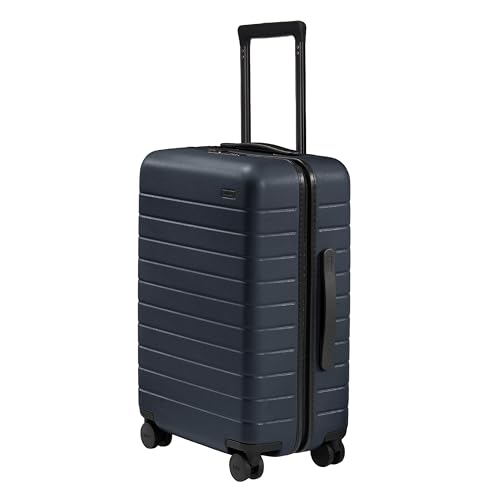
Carry on underseat luggage is a small bag built to slide under the seat in front of you, which keeps your belongings within reach and frees up overhead bin space. This guide explains how to pick a bag that fits the typical under-seat envelope, how to measure your options against airline limits, and how to pack so you aren’t forced to gate-check it. By the end, you should know which dimensions matter, which tradeoffs to expect, and how to test a bag before you fly.
Why Underseat Luggage Matters for Carry-On Travel
Overhead bin space is no longer guaranteed on many flights. Airlines that sell basic economy fares often limit or prohibit full-size carry-ons for passengers who did not pay for a bag, and gate agents may check bins at boarding. A bag that fits under the seat in front of you avoids that problem entirely. It also means you can reach your phone, medication, or a jacket without waiting for the aisle to clear.
Shopping for one? See our guide: 8 Best Carry On International Luggage for Long-Haul Trips.
The tradeoff is capacity. An underseat bag usually holds about 15 to 25 liters, compared with 35 to 45 liters for a standard carry-on. Most travelers use an underseat bag as a personal item alongside a larger carry-on, but on short trips or flights with no bag fees, it can be the only bag you bring.
Understand the Under-Seat Dimensions
Seat designs vary by aircraft, row, and airline, so there is no single universal measurement. As a working reference, many narrowbody aircraft offer roughly 16 to 18 inches of depth and 12 to 14 inches of height under the seat in front, though legroom, seat pitch, and any under-seat electronics or power boxes reduce the usable space. Plan around a conservative target rather than the maximum you think might fit.
Keep these numbers in mind when comparing bags:
- Target outer dimensions: about 14 x 8 x 16 inches or smaller for most aircraft.
- Soft-sided bags can compress a few inches under pressure, but do not count on this to fit a bag that is already oversized.
- Front-seat legroom in exit rows and bulkhead seats often differs, so check your specific seat if you have a tight space.
Step-by-Step: Choosing a Bag That Fits
Step 1: Check Your Airline’s Personal Item Size
Start with the rules for your carrier, since many airlines publish a personal item limit that is smaller than their carry-on limit. Look at the airline’s baggage policy page and note the maximum length, width, and height. Many personal item limits fall in the range of 14 x 18 x 8 inches, though some are tighter. If your bag exceeds the personal item limit, you may be required to gate-check it or pay for a carry-on.
Step 2: Measure Your Current Bag in Its Packed State
Empty bags can measure differently from full ones. Follow these steps:
- Lay the bag flat and fill it to its normal capacity.
- Measure the height from the bottom to the top of the bag, including any handles or wheels.
- Measure the width at the widest point, usually across the front panel.
- Measure the depth from front to back, including any side pockets that bulge outward.
- Compare these numbers to the airline’s limit, keeping a margin of at least half an inch on each side.
Step 3: Test the Fit in a Mock Seat Space
Before you fly, slide the bag under a chair or sofa of similar height to see how it behaves. Soft bags should flatten slightly, and rigid bags should slide without catching. If you have a seat-test kit or a sizer frame, use that too. A bag that barely fits in the store often becomes a problem during boarding when the aisle is crowded.
Step 4: Consider Weight and Wheels
Weight is a separate constraint. Some airlines impose weight limits on carry-ons, and an underseat bag packed to the seams may exceed a practical comfort level. Bags with wheels add height and can make the bag harder to fit under a seat. Many travelers choose a backpack or a flat tote for underseat use because it deforms more easily than a wheeled frame.
Packing Strategy for Underseat Bags
Packing well keeps the bag compact and prevents it from bulging. Use these approaches:
- Place heavy items, such as laptops or chargers, near the center and back panel.
- Roll soft clothing instead of folding it to reduce thickness.
- Use packing cubes to keep the shape uniform.
- Keep frequently used items, like a water bottle or snacks, in a front or top pocket so you do not need to open the main compartment.
Packing Checklist for a Typical Short Trip
| Category | Items | Tip |
|---|---|---|
| Electronics | Phone, charger, power bank, earbuds | Keep the power bank in an outer pocket for airline rules. |
| Documents | ID, boarding pass, medications | Store in a zippered pocket near the top. |
| Clothing | One change of clothes, sleepwear | Roll items and place on the bottom. |
| Toiletries | Travel-size liquids, toothbrush | Use a clear pouch under 3.4 ounces per container. |
Common Mistakes to Avoid
- Assuming any bag labeled “underseat” will fit. Labels are marketing terms, not guarantees. Always measure.
- Overpacking. A bag stuffed past its rated capacity can swell and get flagged at the gate.
- Ignoring the aircraft type. The same airline can use different seat layouts across its fleet.
- Forgetting the handles and wheels. These often add extra height that pushes the bag over the limit.
- Packing liquids and electronics where you cannot reach them. Security screening may require you to open the bag quickly.
Tips for Using Underseat Luggage Well
Board with the bag in front of you, not on your shoulder, so you can slide it under the seat before the aisle fills. If the seat ahead has a reclining feature, leave a small gap to avoid pinching the bag. On longer flights, consider a bag with an outer pocket for a water bottle, since you may not be able to stand easily to retrieve one from a bin.
If you plan to pair an underseat bag with a larger carry-on, weigh the combined load and check your airline’s rules for both. Some carriers allow a personal item plus a carry-on, while others count only one bag for basic fares. Our guide on How to Choose Carry-On Luggage: Size Limits, Weight and Wheels walks through how to balance those two bags.
Recommended gear
Several products help you keep an underseat bag within limits and easy to use:
- Packing cubes keep clothing compressed and uniform, which helps the bag keep its shape. View on Amazon
- A soft-sided backpack designed as a personal item flexes more easily than a rigid frame, which helps it slide under tight seats. View on Amazon
- A luggage sizer frame lets you check dimensions before you reach the gate. View on Amazon
FAQ
What size is a typical carry on underseat luggage bag?
Most underseat bags measure around 14 x 8 x 16 inches, though sizes vary. Always check your airline’s personal item limit, which may be smaller.
Will an underseat carry on bag fit on every airplane?
No. Seat dimensions differ across aircraft models and airlines. A bag that fits one plane may be too tight on another, so measure your bag against the specific aircraft if possible.
Can I use underseat luggage as my only bag?
Yes, for short trips with minimal packing. Expect limited capacity, roughly 15 to 25 liters, and plan clothing and toiletries accordingly.
Is a backpack better than a rolling bag for under the seat?
Often, yes. Backpacks deform more easily and avoid the height added by wheels and telescoping handles.
Do airlines count underseat bags as personal items?
Many do. Check your carrier’s policy, since some treat any bag that fits under the seat as a personal item and others set a separate limit.
How do I avoid gate-checking my underseat bag?
Measure your bag when full, stay within the airline’s personal item dimensions with a small margin, and board early if possible.
Should I measure with the handles and wheels extended?
Yes. Airlines typically measure the bag’s full external dimensions, so include any handles or wheels that stick out.
Are there weight limits for underseat luggage?
Some airlines set weight limits for carry-ons, but personal items are often not weighed. Still, keep the bag manageable so you can lift it into the overhead bin or under the seat.
Conclusion
A well-chosen carry on underseat bag gives you reachable storage, avoids overhead bin uncertainty, and keeps you flexible on short trips. Measure your bag when full, check your airline’s personal item limit, and leave a small margin for handles and seat variation. With those steps, most travelers can board confidently without a gate-check surprise.
Related reading
- Underseater Carry On Luggage: 7 Best Picks Compared (2026)
- Travelpro MaxLite 5 Carry On Luggage Review: Features and Performance
- Smallest Carry On Luggage: 7 Best Compact Picks for Tight Airline Limits (2026)
Ready to choose one?
About Emily Parker
Emily Parker is part of our editorial team and reviews and edits our luggage & travel tech guides, checking product details against manufacturer specifications and owner feedback.