By Emily Parker
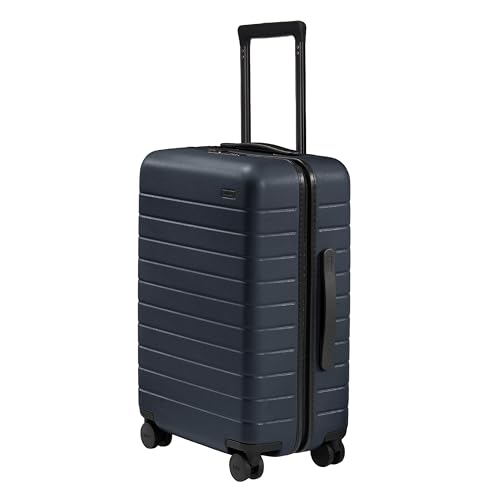
A 22 x14 x9 carry on luggage size is one of the most common dimension limits you’ll run into when flying, and it’s the size many budget and regional carriers use to decide whether your bag rides in the overhead bin or gets tagged at the gate. This guide explains what those three numbers mean, how to measure your bag the way airlines do, which features change the real-world fit, and how to pack so you don’t end up paying for a checked bag you didn’t plan on. By the end, you should be able to check any bag against a 22 x14 x9 carry-on limit with confidence.
What 22 x14 x9 Means for Carry-On Bags
The numbers in 22 x14 x9 are inches: 22 inches tall, 14 inches wide, and 9 inches deep. Airlines generally specify these as maximum outside dimensions, including wheels, handles, side pockets and any exterior straps that stick out. Because the figures are external, a bag that looks like it should fit can still be rejected once its handles and wheel housings are counted.
Converted to metric, 22 x14 x9 inches is roughly 56 x 36 x 23 centimeters. Many international carriers publish metric limits, and a few use slightly different numbers, so if you fly abroad it’s worth checking the metric figures on your airline’s website before you pack.
Carry-on size rules also differ from checked-bag rules. A checked bag is usually measured by total linear inches (length + width + height) and weight, while a carry-on is measured by its physical outside shape. If you’re still deciding between the two categories, How to Choose Carry-On Luggage: Size Limits, Weight and Wheels covers how the limits and weight rules interact.
How to Measure Your Bag Against the 22 x14 x9 Limit
Measuring a bag correctly takes about five minutes and a soft tape measure. Don’t rely on the size printed on the tag or the product listing alone, since manufacturers often list the interior dimensions or the size of the shell without the wheels and handles. Measure the bag as you would carry it onto the plane.
Step 1: Set the Bag Up Like a Passenger
Extend the telescoping handle fully only if you’d normally board with it extended. Most airlines measure with the handle retracted, so check your carrier’s policy. Empty any expansion zippers and fill the bag only if you’re measuring a packed bag for a specific check.
Step 2: Measure Height, Width and Depth
Stand the bag upright on its wheels. Measure height from the bottom of the wheels to the top of the tallest point, which is usually the top handle or the top of the shell. Measure width from the widest side point to the other widest side point, including side pockets and corner guards. Measure depth from the front face to the back face, including any protruding zipper pulls or stand-up feet.
Step 3: Check Expansion Features
Many soft-side bags have expansion zippers that add an inch or two of depth. Airlines measure the bag as it stands when boarding, so if the expansion is open, the bag may be over the limit even if the closed size fits. Zip the expansion closed, measure again, and only then decide whether the bag qualifies.
Step 4: Compare Against Your Airline’s Limit
Write your three measurements down and compare each one to the carrier’s published maximum. If any single dimension is over, the bag can still be rejected at the gate. Some airlines have a separate sizer frame at the gate, and a bag that passes a tape measure can still fail if it doesn’t fit inside the frame at the right angle.
Features That Change Whether a Bag Actually Fits
Two bags with identical labeled dimensions can behave differently in practice. The features below affect the real fit more than most shoppers expect.
- Wheel housings: Spinner wheels mounted at the corners add depth and sometimes height. Check whether the manufacturer’s listed size includes them.
- Handle design: Top and side handles may push a bag slightly over in height or width when retracted.
- Side pockets and external straps: Stretch pockets and compression straps can add a half inch or more to width.
- Shell flex: Soft-side bags can compress slightly when stowed, but airlines generally measure the nominal size, not a squashed one, so don’t count on flex to save you.
- Material thickness: Hard shells keep their shape; soft bags with a heavy packing load may bulge past the limit when full.
If you’re comparing bag styles, Spinner vs Two-Wheel Luggage: Which Rolls Better for Your Trips? explains how wheel placement affects overall depth and maneuverability, and Soft-Side Luggage: Fabrics, Expansion and Pockets goes deeper into expansion zippers.
Choosing a Bag That Fits Carry-On Limits Reliably
A bag built to a 22 x14 x9 carry-on size usually has a labeled size slightly below that threshold, leaving a small margin for handles and wheels. When shopping, look for a stated external size that already includes wheels, or a manufacturer note saying the figure is “airline compliant.” Be cautious with bags that advertise a large interior capacity but list only the shell dimensions.
Material choice also matters. Polycarbonate shells resist cracking and keep a consistent outline, while soft polyester or nylon bags can compress and recover. Each has trade-offs in weight and durability, which are covered in Polycarbonate, ABS, Polypropylene or Aluminum: Hard-Shell Luggage Materials.
If you travel often with a backpack instead of a wheeled bag, the rules differ slightly because the frame and straps can change the measured size. How to Choose a Carry-On Travel Backpack walks through those differences.
Common Mistakes With 22 x14 x9 Carry-On Bags
- Trusting the marketing size instead of measuring with handles and wheels included.
- Forgetting that expansion zippers and external pockets count when they are open or full.
- Packing a bag to the brim so the shell bulges past the limit.
- Assuming a bag that fit on one airline will pass on another with a different sizer frame.
- Ignoring the weight limit, which some carriers enforce separately from size.
Practical Tips for Packing and Boarding
- Measure your bag once at home and keep the numbers in your phone.
- Check your airline’s current carry-on policy the week before you fly, since rules change.
- Zip all expansions closed and retract handles before boarding.
- Keep fragile items and liquids where a gate agent can see them easily if you’re asked to adjust.
- Carry a small foldable tote in case you need to move items out of an overweight bag.
For a broader list of what to bring along, the Carry-On Accessories Checklist is a useful companion.
Recommended gear
- A flexible soft tape measure: A cloth measuring tape lets you follow the curves of a bag’s shell and handles accurately. View on Amazon
- A luggage scale: Many carriers enforce weight limits alongside size, and a handheld scale helps you check before the airport. View on Amazon
- A compression packing cube set: Cubes keep packed clothes compact so the bag stays within its shape instead of bulging. View on Amazon
FAQ
Is 22 x14 x9 the same as a standard carry-on size?
It’s a common carry-on size, especially for budget and regional airlines, but not every carrier uses it. Some allow larger bags, and some have stricter limits, so check your airline before you buy or pack.
Do wheels and handles count toward the size limit?
In most cases, yes. Airlines usually measure the outermost dimensions, so wheels, handles and external pockets are included unless the carrier states otherwise.
Can I use a bag that is 22 x14 x9 with an expansion zipper?
Only if the expansion is closed when you board. An open expansion adds depth and can push the bag over the limit.
Will a bag that fits in my home measurement always pass at the gate?
Not always. Gate sizer frames can be strict, and a bag that is slightly over at an angle may be rejected even if the tape measure reading looked fine.
Do personal items count toward the carry-on allowance?
Usually no. Most airlines allow one personal item, such as a small backpack or handbag, in addition to the carry-on, but the rules vary by carrier and fare class.
What happens if my bag is too big at the gate?
The gate agent may ask you to check it, which can come with a fee depending on the airline and ticket type. Keeping valuables and medication in a smaller bag can reduce the risk.
Are carry-on size rules the same for international flights?
Not always. International carriers may publish metric limits that differ slightly from the inch figures, so confirm the rules for your specific route.
Conclusion
A 22 x14 x9 carry on luggage size is a practical target for most budget and regional flights, but the number only helps if you measure the full bag, including wheels, handles and any open expansion. Check your airline’s published limit before you buy, measure your bag with a soft tape, and pack with a margin for error. A few minutes of preparation at home can save you from a stressful gate check.
Ready to choose one?
About Emily Parker
Emily Parker is part of our editorial team and reviews and edits our luggage & travel tech guides, checking product details against manufacturer specifications and owner feedback.