Sorting through the many luggage accessories on the market can be overwhelming. A few genuinely save you from overweight fees, lost bags, or damaged belongings. Others add bulk and cost with little benefit. This guide covers the accessories worth buying—luggage scales, privacy tags, Bluetooth trackers, straps, TSA-recognized locks, and covers—and explains which ones you can confidently skip.
Luggage Scales – A Worthwhile Investment for Avoiding Overweight Fees
A portable luggage scale is one of the most practical accessories you can own. It lets you weigh your suitcase at home, so you never face surprise fees at the check-in counter. For anyone who travels with checked luggage or wants to maximize a carry-on without exceeding the limit, a small scale quickly pays for itself.
What it is and who it suits
A luggage scale is a handheld device with a hook or strap that supports your bag while you lift it. Most models are compact enough to pack inside a carry-on or personal item. They suit any traveler who checks a bag, especially those who pack heavy souvenirs or struggle to estimate weight by feel.
Main types and how they differ
Two common types exist: analog (spring-based) and digital. Analog scales are cheaper, never need batteries, but can lose accuracy over time. Digital scales offer a clear readout, automatic tare (zeroing out the weight of a strap or hook), and often switch between pounds and kilograms. Many digital models have a backlit display and use conventional watch-style batteries that are easy to replace.
Features that actually matter
- Accuracy: Look for a scale that reads within a small margin of error—most quality digital models do.
- Tare function: Lets you attach a strap or bag handle and zero out its weight, so you only measure the bag itself.
- Battery life and type: Digital scales typically use CR2032 coin cells or AAA batteries. A scale with a long-lasting battery is less hassle on trips.
- Weight capacity: Most household scales handle up to 50–110 pounds, which covers all airline limits. Check the spec sheet to confirm it suits your heaviest bag.
- Readability: A large, backlit display helps at the curb or in dim hotel rooms.
For most travelers, a digital scale with tare and a clear display is the best choice. Avoid ultralight scales with flimsy hooks that could snap under a heavy load. If you want to weigh your bag at home, consider picking up a luggage scale before your next trip.
Sizing, fit and compatibility
Most scales work with any bag that has a sturdy handle or strap. For duffels or soft-sided luggage without a rigid handle, use the supplied strap or attach the hook to a cross-body strap. Check that the hook or strap can support the bag’s weight without damaging the material.
Common buying mistakes
Buying an analog scale that is not calibrated correctly can give false readings. Do not assume a scale is accurate out of the box—test it with an object of known weight, such as a dumbbell or a bag of rice. Another mistake is forgetting to check the battery level before a trip; carry a spare if the scale uses a button cell.
Care, cleaning and upkeep
Store the scale in a dry place, remove the battery if storing for months, and wipe the hook and housing with a damp cloth. Avoid dropping it, as impact can affect calibration.
Luggage Tags with Privacy Covers – Simple but Effective
A luggage tag helps identify your bag if it gets delayed or mixed up. A tag with a privacy cover hides your address from casual view, adding a layer of security. They are lightweight, inexpensive, and one of the few accessories that nearly every traveler should own.
What it is and who it suits
A luggage tag typically attaches to the handle of a suitcase or backpack. It has a clear window for your name and contact details, often with a flap or cover that keeps the information hidden until needed. Anyone who checks a bag or uses overhead bins will benefit.
Main types and how they differ
Tags come in materials such as nylon webbing, leather, silicone, and hard plastic. The key differentiator is the privacy feature: some have a slot-in card with a foldable flap, others use a two-piece design that snaps shut. The type that lasts longest is one with a secure attachment (like a sturdy loop or buckle) and a weather-resistant construction.
Features that actually matter
- Durable attachment: Look for a loop or strap that can survive the baggage system. Breakaway clips can fail.
- Privacy cover: A simple flap or opaque window prevents strangers from seeing your address.
- Weather resistance: Tags made of coated nylon or silicone withstand rain and scrapes better than paper or untreated leather.
- Readability: A large window that holds a printed card or a write-on section works well. Some tags have a slot for a business card.
Sizing, fit and compatibility
Most tags fit standard luggage handles. For bags with thick or oddly shaped handles, choose a tag with a long strap or adjustable loop. You can also loop the tag through the zipper pull if the handle is too wide.
Common buying mistakes
Buying a tag that attaches with a non-replaceable plastic clip that snaps on first use. Also, writing permanent contact details directly on the tag with a permanent marker is a mistake if you change addresses—use a card that can be replaced. Consider picking up luggage tags with removable cards for flexibility.
Care, cleaning and upkeep
Wipe plastic or silicone tags with soapy water. For leather, condition occasionally. Replace paper cards when they fade or get wet.
To learn more about the different types of luggage tags and how to choose one, see the general guide on luggage accessories.
Bluetooth Trackers – Helpful but Know the Battery Rules
A Bluetooth tracker placed inside your suitcase can help locate it if it goes missing within a short range—usually a Bluetooth connection to your phone or a network of nearby phones. They are not a substitute for airline tracking, but they can reduce anxiety.
What it is and who it suits
A small coin-sized device that pairs with your smartphone. When the bag is nearby, you can ring the tracker; when it is far away, the crowd-sourced network of other users’ phones can report its location. Suits frequent flyers, especially those connecting through multiple airports.
Main types and how they differ
Trackers vary by battery type. Many use a coin cell (such as a CR2032) that you replace about once a year; others have a sealed battery or recharge over USB. The replaceable or rechargeable options are more sustainable.
Battery rules and airline regulations
A small tracker with its coin cell installed counts as a battery-powered device, not a spare battery, so under FAA rules it is generally allowed in both carry-on and checked bags. Spare (uninstalled) lithium batteries are different: they must go in your carry-on. The safest approach is to check the official Federal Aviation Administration (FAA) guidance before your flight and also confirm with your airline. If the tracker is removable and contains a lithium battery, keep it in your carry-on.
Features that actually matter
- Crowd-finding network: A tracker that uses a large network of phones can locate your bag far beyond standard Bluetooth range.
- Replaceable battery: Models with a user-replaceable coin cell are more economical over time.
- Size and weight: A flat, lightweight device slips into a pocket or seams without adding noticeable weight.
- Compatibility with your phone ecosystem: Some trackers work better with iOS, others with Android.
Sizing, fit and compatibility
Place the tracker in an interior pocket, a shoe, or attach it to the inside frame with adhesive. Do not put it in checked baggage if the battery is loose; follow the guidance above. For more travel accessories that pair well with trackers, check the broader category of travel accessories.
Common buying mistakes
Assuming a Bluetooth tracker can locate your bag globally—its crowd network is only as good as the number of users in that region. Another mistake is forgetting that the tracker’s battery eventually dies and must be replaced or the whole unit replaced. Do not buy a tracker that has no replaceable battery if you plan to use it long-term.
Care, cleaning and upkeep
Keep the tracker away from extreme heat or moisture. Replace the battery at the recommended interval. If the tracker uses a sealed coin cell, dispose of it according to local electronic waste rules.
Luggage Straps – Security or Extra Bulk?
A luggage strap—typically a long nylon or polypropylene band that wraps around the suitcase—can reinforce zippers, prevent accidental opening, and help identify your bag on the carousel. But these same straps can add several ounces of weight, snag on conveyor belts, and sometimes do more harm than good.
When to consider a strap
If your suitcase has a single zipper that tends to pull open, a snug strap around the middle can keep it closed. Some travelers also use straps to compress soft-sided bags. If you need a bright visual marker, a colorful strap is easier to spot than a plain suitcase.
When to skip the strap
Hard-sided suitcases with built-in locks rarely need a strap. The extra weight may push you over a strict carry-on allowance. Straps can also get caught in luggage conveyor machinery and tear, or become a nuisance when you try to open the bag quickly. Many straps come with a lockable buckle, but the buckle adds more weight.
Common buying mistakes
Buying a strap that is too loose—a loose strap can slip off or get caught. Also, check that the strap is long enough to go around your bag’s full width, including handles.
Care, cleaning and upkeep
Machine wash most nylon straps in a laundry bag on gentle cycle. Air dry. Inspect the buckle and webbing for fraying before each trip.
TSA-Recognized Locks – Useful for Checked Bags
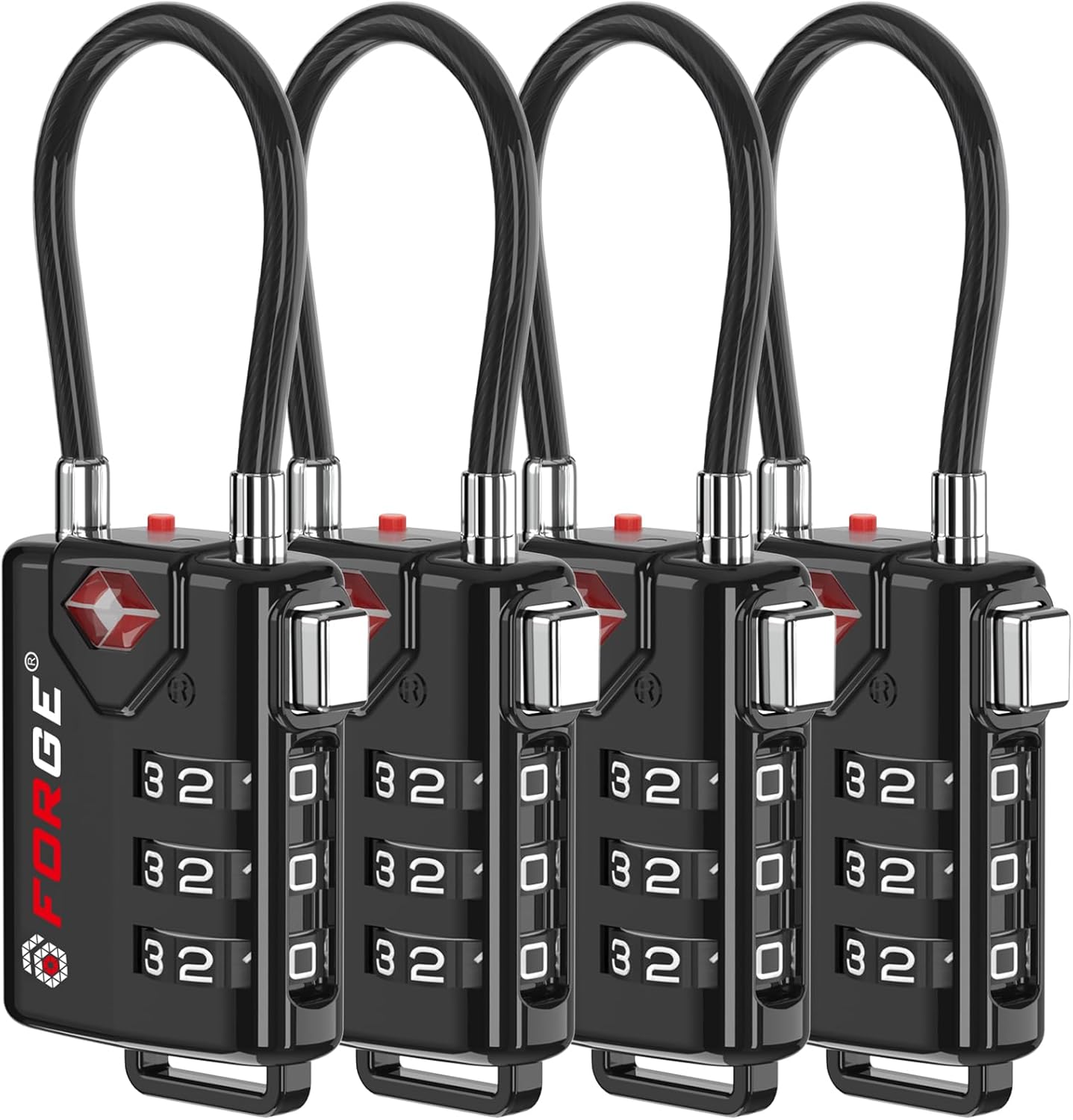
TSA-recognized locks allow security officers to open your checked bag for inspection without cutting the lock. While not required, they provide peace of mind if you need to lock your luggage.
How they work
TSA agents use a master key to open locks bearing the official TSA-recognized logo. The lock stays intact and can be re-locked. These locks come as combination dials or key-operated. They are standard cable locks or built-in locks on some suitcases.
Features that actually matter
- Durable materials: A zinc alloy or steel lock body lasts longer than cheap plastic.
- Easy-to-set combination: Look for a lock where you can set your own three- or four-digit code without tools.
- Visible indicator: Some locks have a red indicator that shows if the lock has been opened by an agent.
- Size and weight: Compact locks add minimal weight to your bag.
Common buying mistakes
Buying any lock that advertises “travel lock” but does not show the official TSA logo—it is not recognized. Also, avoid locks that are too small to fit through the zipper pulls of large suitcases. For a detailed explanation of how TSA locks function and whether they are necessary, read TSA Luggage Locks Explained.
Care, cleaning and upkeep
Lubricate the dial or keyhole occasionally with dry graphite. Do not force a sticky lock; that can break the mechanism. Store the lock in a dry place when not in use.
Luggage Covers – Protection vs Extra Weight
A luggage cover is a stretchy fabric sleeve that slips over your suitcase to protect it from scratches, dirt, and rain. While it can keep a bag looking new, it adds weight and can snag on conveyor belts or tear during handling.
When a cover makes sense
For expensive hard-shell suitcases that you want to keep pristine, a cover adds a layer of protection against the rough baggage system. It also makes your bag easy to spot. Some covers have reflective strips for visibility in low light.
When to skip it
Soft-sided luggage rarely needs a cover—the fabric already resists scuffs. The extra weight of a cover (often several ounces) can tip a carry-on over the limit. Covers also add bulk when you fold them, and they can be forgotten or lost. They can also get caught in machinery and rip, requiring replacement.
Common buying mistakes
Buying a cover that is not the correct size for your suitcase—a loose cover is more likely to snag. Another mistake is using a cover on a bag with a telescopic handle; the handle may poke through an opening, weakening the fit. Check the manufacturer’s sizing chart.
Care, cleaning and upkeep
Most polyester or nylon covers can be hand-washed or machine-washed on delicate. Hang to dry. Do not bleach. Inspect for holes before each trip.
When Accessories Add Weight Without Value
Every accessory you add to your suitcase increases its base weight. A typical luggage scale, a tag, a tracker, a strap, a lock, and a cover together can add over a pound of dead weight. That pound could be used for an extra pair of shoes or a travel item you actually need. Before buying, ask yourself: Does this accessory serve a purpose I cannot achieve otherwise?
Accessories that often add weight without value include multiple straps, bulky locks with metal bodies, full-body covers for bags that are already durable, and tags with heavy leather loops. If you are close to an airline weight limit, skip any accessory that is not essential.
Also, avoid carrying duplicates—if your suitcase has a built-in combination lock, you do not need an external one. Weigh your empty bag with all intended accessories before packing, so you know exactly how much weight you have left.
FAQ
Are luggage scales accurate enough to trust?
Yes, most quality digital scales are accurate within a small margin, usually plus or minus a few ounces. To be safe, test yours with an object of known weight (like a dumbbell) before relying on it. Always check the manufacturer’s tolerance stated in the product specifications.
Can I use a Bluetooth tracker in my checked luggage?
You can, but with caution. If the tracker uses a coin-cell lithium battery that is installed inside the device, most airlines allow it in checked bags. However, if the tracker has a removable lithium battery that could be considered a spare, it must go in your carry-on. Check both the FAA guidance and your airline’s policy before departure.
Do TSA locks guarantee my luggage won’t be opened?
No. TSA-recognized locks allow authorized agents to open your bag, but they do not prevent theft or damage. The lock is a deterrent, not a guarantee. If you are concerned about valuables, keep them in your carry-on or use a bag with a built-in lock.
Should I use a luggage cover for a soft-sided bag?
Generally, no. Soft-sided bags are already scuff-resistant, and a cover adds weight and can snag. Covers are more useful for hard-shell suitcases to prevent scratches. If you do use one, choose a cover that fits snugly.
Ultimately, the best luggage accessories are the ones that solve a real problem without adding unnecessary bulk or weight. Prioritize a scale and a quality tag with a privacy cover. Consider a Bluetooth tracker if you often travel with checked luggage, but check battery rules. Skip straps and covers unless you have a specific need. By staying selective, you keep your bag light, your belongings secure, and your travel routine simple.