By Emily Parker
A 22 x 14 x 9 carry on luggage size is one of the most common dimensions sold in the United States, and it is the size most frequently used as a benchmark for airline carry-on rules. In this guide, you will learn what those numbers actually mean, how to measure a bag the way airlines do, how the size compares with major carriers and budget airlines, and what to check so you do not get stopped at the gate. Measurements are given in inches, and the figures reflect what manufacturers and airlines typically specify.
What 22 x 14 x 9 Inches Means
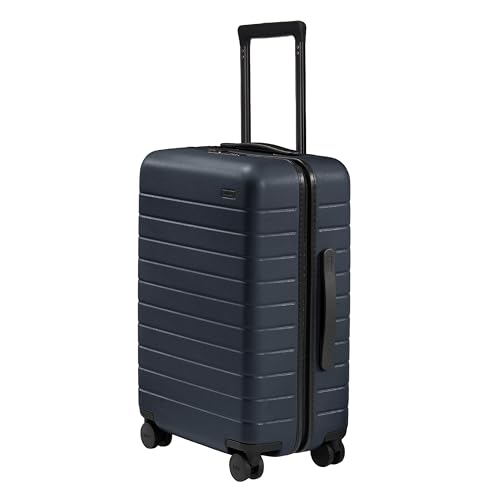
The three numbers describe height, width and depth, in that order. The first number is the longest vertical dimension when the bag stands upright, the second is the width across the front, and the third is the depth from front to back. A 22 x 14 x 9 bag therefore measures 22 inches tall, 14 inches wide and 9 inches deep, for a total of 45 linear inches.
Linear inches are the number airlines care about. Adding the three dimensions gives a quick check: 22 + 14 + 9 = 45. Many carriers set their carry-on limit at a total linear measurement, so the sum matters as much as any single side.
Why this size has become a standard
Manufacturers designed this dimension to match the overhead bins on many narrow-body aircraft while staying within the limits of most US carriers. Because it sits near the middle of the typical allowance, it has become the default for “full-size” carry-ons sold online and in stores.
Does 22 x 14 x 9 Fit Airline Carry-On Limits?
For most major US carriers, a 22 x 14 x 9 bag fits within the standard carry-on allowance. Still, the rules differ, and a few airlines have tighter limits, especially on regional jets or budget fares. Always check your carrier’s current published dimensions before you travel, since policies change.
| Carrier type | Typical carry-on limit (inches) | Does 22 x 14 x 9 fit? |
|---|---|---|
| Major US full-service carriers | About 22 x 14 x 9 maximum, often expressed as 45 linear inches | Yes, at the stated limit |
| Some low-cost carriers | Smaller personal-item and bag allowances, sometimes with stricter size rules | Check the exact limit; may require a smaller bag or a paid fare |
| Regional jets | Often smaller overhead space | May be gate-checked even if it meets the published size |
Because 22 x 14 x 9 sits right at the usual maximum, there is almost no margin. Any added handle, wheel housing or exterior pocket that pushes the measurement over the limit can cause problems.
How to Measure Your Bag Correctly
Many travelers measure a bag only by its labeled size, and that is where trouble starts. Brands often list interior or nominal dimensions, while airlines measure the exterior, including wheels, handles and side pockets. Measure the bag yourself, fully packed or in its typical packed state, to see what the gate agent will see.
Step-by-step measuring method
- Stand the bag upright on a flat floor with the wheels touching the ground.
- Measure height from the bottom of the wheels to the top of the highest handle or topmost point, with the telescoping handle fully retracted.
- Measure width from the outermost side to outermost side, including any side zippers or straps that stick out.
- Measure depth from the front face to the back, including any zippered front pocket and wheel housings.
- Add the three numbers to get linear inches and compare against your airline’s stated total.
Packed versus empty
A soft-sided bag can bulge when packed, which increases its width or depth. A hard-shell bag usually holds its shape. Measure in the condition you will actually travel with, and leave a small margin of an inch or so, because overhead bin sizers are unforgiving.
Weight Limits and How They Interact With Size
Size is only half the equation. Many airlines also set a weight limit for carry-ons, and some do not enforce one at all. Empty weight matters a great deal here, since a 22 x 14 x 9 hard-shell can weigh noticeably more than a soft-sided bag of the same dimensions. Choosing a lighter shell leaves more room for packed weight before you approach a limit.
If you travel with a heavy load, check whether your airline enforces weight at the gate. Carry-on weight rules are less consistent than size rules, so weigh your packed bag on a bathroom scale before you go.
Choosing Between Spinner and Two-Wheel Designs
A 22 x 14 x 9 bag comes in both spinner and two-wheel configurations. Spinners roll on four wheels and can be pulled in any direction, which many travelers find easier in busy terminals. Two-wheel bags stand more stably and tend to hold up better on rough pavement. Both designs usually add a little depth to the measurement, so verify the total with the wheels included.
For a deeper comparison, see Spinner vs Two-Wheel Luggage: Which Rolls Better for Your Trips?. If you are still deciding on overall capacity and features, How to Choose Carry-On Luggage: Size Limits, Weight and Wheels covers the broader trade-offs.
Hard-Shell or Soft-Side for This Size
Soft-sided bags often give a little extra flexibility. Many have compression panels and some expansion, but expansion can push a bag past the limit, so use it with care. Hard-shell bags protect fragile items better and keep their dimensions consistent. Materials such as polycarbonate and ABS are common choices. You can read more in Soft-Side Luggage: Fabrics, Expansion and Pockets and Polycarbonate, ABS, Polypropylene or Aluminum: Hard-Shell Luggage Materials.
Recommended gear
These items help you stay within the dimensions and avoid surprises at the gate.
- Soft measuring tape: A flexible tape lets you measure height, width and depth around handles and wheels accurately. View on Amazon
- Digital luggage scale: A handheld scale helps you confirm packed weight before you reach the airport. View on Amazon
- Luggage tags with a clear address window: Useful for identifying your bag quickly on a crowded carousel. View on Amazon
Common Mistakes
- Trusting the brand’s listed size alone. Listed dimensions may exclude wheels or handles. Measure the bag yourself.
- Forgetting to retract the handle. A telescoping handle left extended adds several inches.
- Overpacking a soft-sided bag. Bulging fabric can push the width or depth past the limit.
- Ignoring regional jet rules. A bag that fits on a larger aircraft may not fit on a smaller one.
- Assuming all airlines are the same. Budget carriers often have stricter allowances and different fees.
- Skipping the weight check. Some carriers enforce weight limits at check-in.
Tips for Traveling With a 22 x 14 x 9 Bag
- Keep the handle retracted and the wheels clean so the measurement stays consistent.
- Pack heavier items low and near the wheels to help the bag stand upright.
- Keep a printed or saved copy of your airline’s current carry-on policy.
- Leave a little room in the bag so it still fits after you add a jacket or souvenirs.
- If you are unsure, check the carrier’s size policy on its official website before your flight.
FAQ
Is 22 x 14 x 9 the same as 45 linear inches?
Yes. Adding 22, 14 and 9 gives 45 linear inches, which is the total many airlines use when stating carry-on limits.
Will a 22 x 14 x 9 bag fit in every overhead bin?
Not always. Bin sizes vary by aircraft type, and some smaller planes have less space. A bag that meets the published limit can still be gate-checked if the bin is full.
Should I measure the bag with the wheels included?
Yes. Airlines usually measure the bag as a whole, including wheels, handles and any protruding pockets.
Does an expandable 22 x 14 x 9 bag count at its expanded size?
Generally, airlines measure the bag as it is presented at the gate. If the expansion pushes it past the limit, you may be asked to compress it. Check your airline’s rules before relying on expansion.
Do all US airlines allow a 22 x 14 x 9 carry-on?
Most major carriers do, but policies differ, especially for low-cost and regional flights. Confirm your specific airline’s current limit before you travel.
Is a hard-shell or soft-side better in this size?
Each has trade-offs. Hard shells protect contents and hold their shape, while soft-sided bags can be more flexible for squeezing into tight spaces.
Can I bring a 22 x 14 x 9 bag plus a personal item?
Many airlines allow one carry-on and one personal item, but the rules for each vary. Check whether your fare includes both before you board.
Conclusion
A 22 x 14 x 9 carry on luggage size fits the limits of most major US airlines, but the margin is thin, so measure the bag yourself with the handle retracted and the wheels included. Compare the 45 linear inch total against your carrier’s current policy, and keep weight in mind. With those checks done, you can board with confidence.
Ready to choose one?
About Emily Parker
Emily Parker is part of our editorial team and reviews and edits our luggage & travel tech guides, checking product details against manufacturer specifications and owner feedback.