 By Audrey Hayes
Updated November 2026
A travel plug adapter for Iceland lets you connect US devices to Iceland’s wall sockets, which use the European two-round-pin Type F standard at 230 volts. By the end of this guide, you will know whether your devices need only a plug adapter or also a voltage converter, how to check your gear’s labels, and what to look for when you buy. If you are planning a trip that includes the Ring Road or a few days in Reykjavik, the steps below will help you avoid a dead phone at the glacier lagoon.
What Plug and Voltage Does Iceland Use?
Iceland uses the same plug and socket system as most of continental Europe. Its outlets accept Type F plugs, which have two round pins and grounding clips on the sides. Iceland’s mains supply runs at 230 volts and 50 hertz. The United States runs at 120 volts and 60 hertz. That voltage gap is the reason a plug adapter alone is not always enough.
Shopping for one? See our guide: Travel Adapter Plug for Japan vs Universal Adapter: Which Should You Choose?.
Because the plug shape and the voltage are two separate issues, it helps to think about them one at a time. The plug determines whether your device fits into the wall. The voltage determines whether the device can safely use the power once it is connected.
Plug type versus voltage
A plug adapter only changes the shape of the connector. It does not change the electrical output. Many modern devices are rated for a wide input range, so they can handle 230 volts without any help. Others are not, and plugging them straight in can damage the device or create a safety hazard.
Step 1: Check Your Device Labels for Input Voltage
The fastest way to decide what you need is to read the fine print on each device. Most electronics list their input voltage on a label printed on the device body, the power brick, or the charger. You are looking for a line that reads something like “INPUT: 100–240V ~ 50/60Hz.” If the range includes 230 volts, the device is dual-voltage and a plug adapter is enough.
Work through this checklist for every item you plan to charge or plug in:
- Find the input rating on the device or its power adapter.
- Note whether it says 100–240V or 110–240V. Either one covers Iceland.
- If it only lists 110–120V or 120V, it needs a voltage converter.
- Check whether it is a USB charger, which is almost always dual-voltage.
- Record the results so you can pack the right gear before departure.
What is usually dual-voltage
Most phone chargers, laptop power bricks, tablets, and cameras from major manufacturers are rated for 100–240 volts. Manufacturers typically specify this range because their products are sold worldwide. Items that often are not dual-voltage include some older hair dryers, electric shavers without a dual-voltage switch, and certain kitchen appliances.
Step 2: Choose Between a Plug Adapter and a Voltage Converter
Once you know your devices’ ratings, you can match each one to the correct accessory. The table below summarizes the usual outcomes.
| Device type | Typical input rating | What you need in Iceland |
|---|---|---|
| Smartphone or tablet charger | 100–240V | Plug adapter only |
| Laptop power brick | 100–240V | Plug adapter only |
| Camera battery charger | 100–240V | Plug adapter only |
| Older hair dryer (US-only label) | 110–120V | Voltage converter plus plug adapter, or leave at home |
| Electric toothbrush base | Varies by model | Check label; often dual-voltage |
Manufacturers specify these ratings, and they are the authority on what each device can handle. If a label is hard to read or missing, check the manufacturer’s website or the user manual before plugging anything in.
Step 3: Pick the Right Travel Plug Adapter
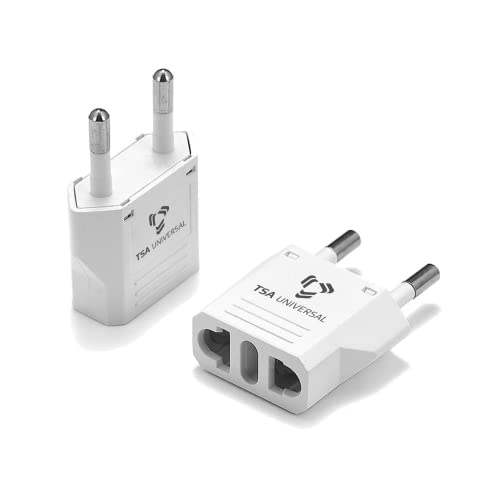
For Iceland, you need an adapter that fits Type F sockets. Adapters sold as “Europe” or “Continental Europe” adapters usually work, and many travel adapters are labeled with the Type C and Type F shapes. Look for these features:
- Compatibility with Type F (two round pins with side clips) sockets.
- Enough USB ports for your phone, watch, and earbuds, plus a laptop if you bring one.
- A built-in surge protector or fuse, which helps protect electronics from power spikes.
- A sturdy body that resists cracking in a bag.
- A USB-C Power Delivery port if your laptop charges over USB-C.
Universal versus Europe-only adapters
A universal adapter accepts many plug shapes, which makes it useful if you plan to visit several countries. A Europe-only adapter is simpler and often sufficient for Iceland alone. If you are unsure whether your trip will expand beyond Iceland, a universal model gives you more flexibility. For a side-by-side look at those two choices, see UK Travel Plug Adapter vs Universal Adapter: Which Should You Choose?, which covers how the plug types differ.
Why USB ports matter
Most travelers today carry several USB-powered devices. A single adapter with two or three USB ports and one or two AC outlets can cover a phone, a tablet, and a laptop without needing a power strip. Check the total output rating, usually listed in watts, to confirm the adapter can handle your combined load.
Step 4: Plan for Iceland’s Power and Safety Realities
Iceland’s electrical system is reliable in cities and at most hotels, guesthouses, and campsites. Outlets are standard Type F, and many accommodations have USB charging points in rooms. Still, it helps to plan for a few situations that differ from home.
- Some older guesthouses in rural areas may have fewer outlets, so one adapter with multiple ports is useful.
- Bathroom outlets often have a switch or a separate shaver socket. Confirm before using wet appliances.
- Power bank charging is handy on long drives or hikes where outlets are scarce.
- Keep a spare cable, since a lost charger can be hard to replace away from big towns.
If you are unsure about how a particular appliance will behave on Iceland’s voltage, consult the manufacturer or a qualified electrician before use. Physical safety around wet outlets is a serious matter, and it is better to be cautious.
Common Mistakes to Avoid
- Assuming an adapter converts voltage. It does not. Check the device label first.
- Buying a plug that only fits UK sockets. UK plugs are Type G and will not fit Iceland’s Type F outlets.
- Overloading a single adapter. Adding a hair dryer or kettle to a small USB-focused adapter can overheat it.
- Forgetting the power bank. Charging on the go matters more than people expect.
- Packing without checking labels. Make the check at home, not in a hotel room with a dead device.
Recommended gear
A few types of gear make Iceland trips smoother. Choose items that match the plug and voltage guidance above.
- A Europe-focused travel plug adapter with Type F compatibility and USB ports covers most phone and laptop charging needs. View on Amazon
- A universal travel adapter with multiple USB ports is useful if you may visit other countries later. View on Amazon
- A compact voltage converter is only needed for devices rated at 110–120 volts. Use it sparingly and confirm the wattage rating before buying. View on Amazon
- A portable power bank keeps your phone charged during day trips when outlets are not available. View on Amazon
Related Reading
If your trip includes more than one country, comparing plug guides can help. For example, the Travel Adapter Plug for Ireland: 6 Best Options for US Travelers article covers another European market, while Travel Plug Adapter Portugal: Which Plug Type Portugal Uses and What to Buy explains a neighboring plug situation. For a broad comparison of adapter styles, see 6 Best Adapters for European Travel Plugs Compared (2026).
FAQ
Do I need a plug adapter for Iceland?
Yes, if you plan to plug US-style two-flat-pin devices into Iceland’s wall sockets. Iceland uses Type F sockets, so you need an adapter that fits them.
Do I need a voltage converter for Iceland?
Only for devices that are rated for 110–120 volts and do not list 230 volts or a 100–240V range. Most phone, laptop, and camera chargers are dual-voltage and do not need a converter.
Is Iceland’s plug the same as the UK plug?
No. The UK uses Type G plugs, which are rectangular with three pins. Iceland uses Type F, which has two round pins and side clips. A UK-specific adapter will not fit Iceland’s sockets.
Can I use a universal adapter in Iceland?
Yes. A universal adapter with Type F compatibility works in Iceland and in many other countries. Confirm the adapter’s specifications before buying.
What voltage does Iceland use?
Iceland’s standard mains voltage is 230 volts at 50 hertz. Devices should list a compatible input range that includes this figure.
Should I bring a power bank?
It is a good idea. Power banks help when you are on long drives, hiking, or staying somewhere with limited outlets. Check airline rules for carrying lithium batteries before you fly.
Where can I confirm the latest electrical standards for Iceland?
For current official information, check the government or electrical authority resources in Iceland or the manufacturer’s guidance for your device. If you have a specific appliance concern, consult a qualified electrician or the manufacturer before use.
Conclusion
Iceland uses Type F sockets at 230 volts, so a plug adapter handles the shape difference for most modern devices. Check each device’s input rating, and add a voltage converter only for items rated at 110–120 volts. Pack a multi-port adapter and a power bank, and you will be ready for the trip.
Related reading
- Travel Plug Adapter Type C: 6 Best Picks for Europe Trips (2026)
- Travel Plug Adapter Greece: Which One You Need and Why (2026)
Ready to choose one?
About Audrey Hayes
Audrey Hayes is part of our editorial team and reviews and edits our luggage & travel tech guides, checking product details against manufacturer specifications and owner feedback.